
Working Diagnosis
My arm hurts when I throw.
The elbow or shoulder is where the pain shows up. It is usually not where the problem starts. ATP clears anything structural first, then finds what is sending the arm too much force: a posterior shoulder that cannot slow the arm down, a lunge pattern that has failed, a neck that will not rotate, or a nervous system that locks the shoulder down to steady the head. Treat one thing, retest, until the pain number moves. Then a plan that keeps you throwing.
By Josh Heenan. Reviewed by Kevin Murat, DC, ATC. Updated .
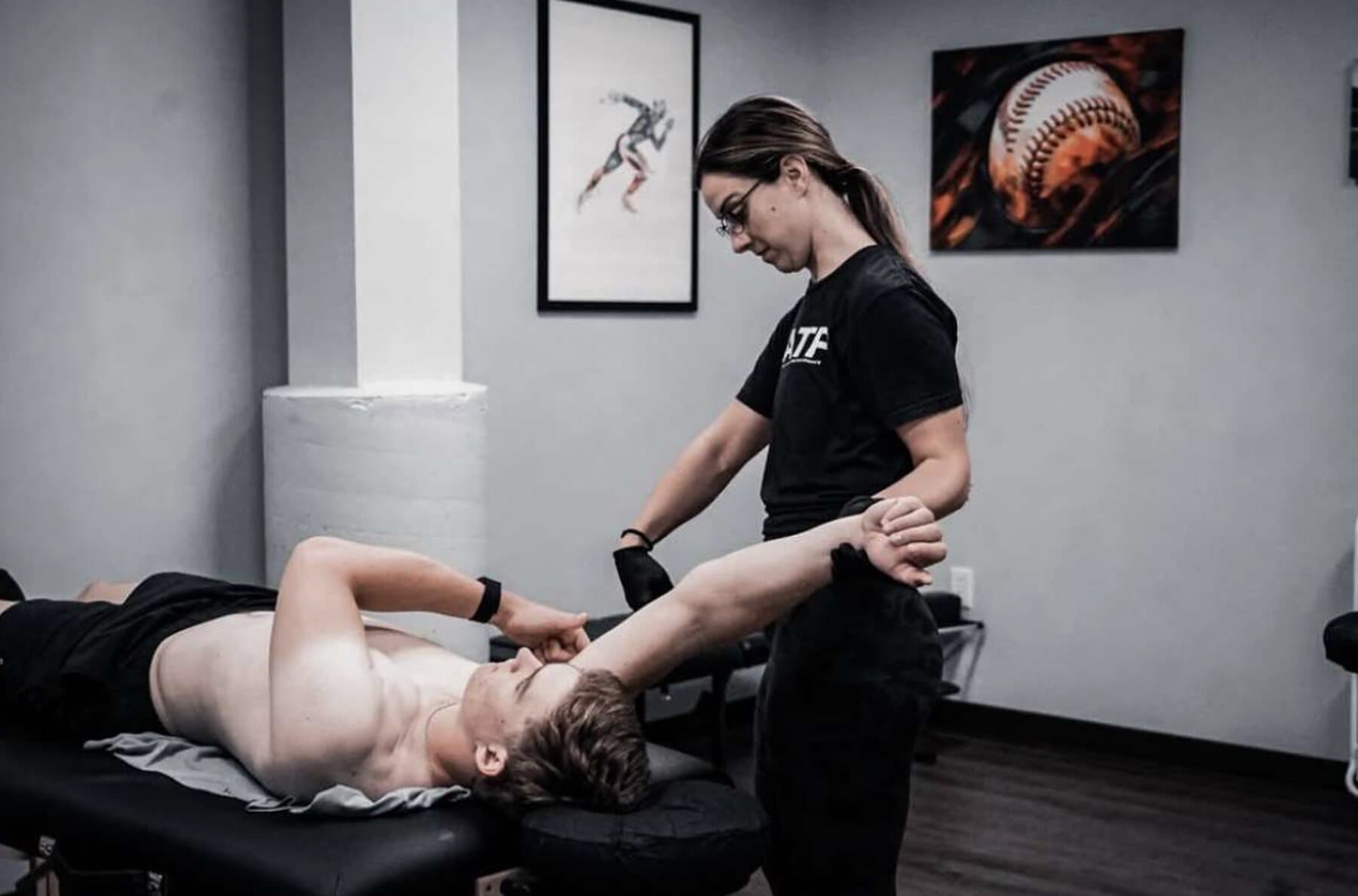
From Josh Heenan's Instagram
Watch: two years of shoulder pain that started with a car accident.
His basic eye screen looked fine. Add a memory question and his eyes start searching. Turn on strobes during single-leg balance and he falls apart.
On force plates with his eyes closed, his sway went up more than eleven times on one side. He was stabilizing his whole body with vision, and at full intent the shoulder paid for it. Years of shoulder treatment never touched that.
Watch on InstagramRest lowers the load. It changes nothing.
Six weeks off, a return-to-throw program, and the same pain at the same pitch count is a familiar story. Rest drops the load on tissue that was asked for more than it could give. It does not change why it was asked. The pain leaves and returns the moment volume goes back up, which turns a six-week problem into a two-year problem.
Where the arm's pain usually starts
Pain in the back of the elbow at ball release is a case ATP sees constantly in summer, in pitchers and position players alike. In most of them the posterior shoulder is restricted, the arm cannot decelerate the way it needs to, and the elbow absorbs force it was never built to absorb at the exact moment load peaks. Treat the shoulder, retest the elbow, and the pain number changes in the room.
Further up the chain: well over half of the elbow cases ATP sees each year trace to a weak or dysfunctional lunge pattern, because the pelvis, spine, ribs and shoulder blade have to be organized before the elbow can be. A neck that will not rotate is common in throwers, and most common in the ones who end up needing surgery.
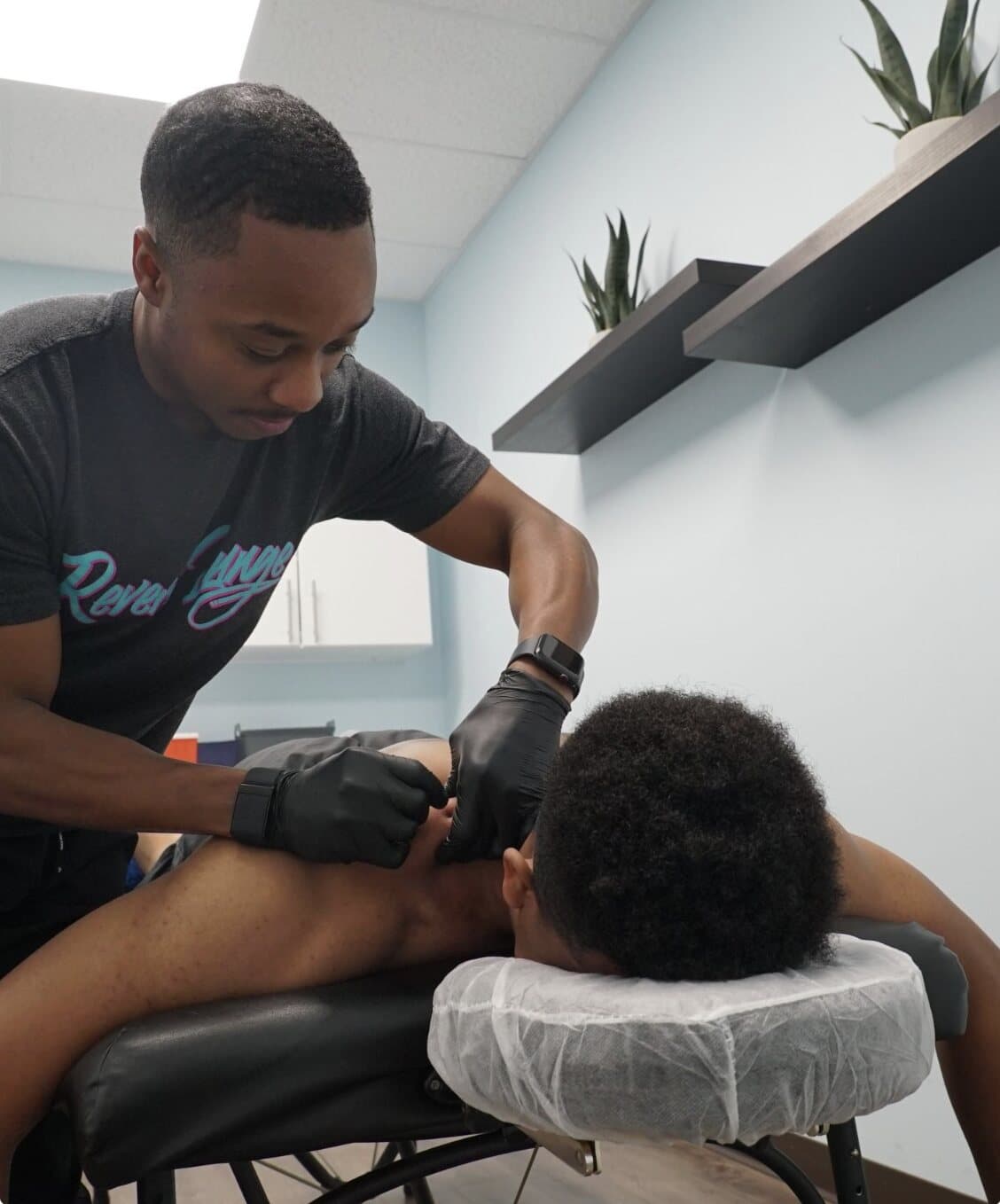
Clean MRIs and a control-system problem
Four clean MRIs and pain only on forward throws is evidence. It points away from structure and toward the muscular and neurological systems, and it is time to treat those rather than order a fifth scan. Some arms are a nervous-system problem wearing a shoulder problem's clothes.
A college right-hander had two years of shoulder pain after a car accident and a concussion. His basic eye screen looked fine. Add a memory question and his eyes started searching. On force plates with his eyes closed, his single-leg sway went up more than eleven times on one side. He was stabilizing his whole body with vision, and at full intent the shoulder was paying for it. Years of shoulder treatment had never touched that. ATP screens eye tracking, balance and neck rotation in every arm-pain evaluation, because a brain that cannot steady the head and eyes locks down the neck and shoulder to do it, throw after throw.
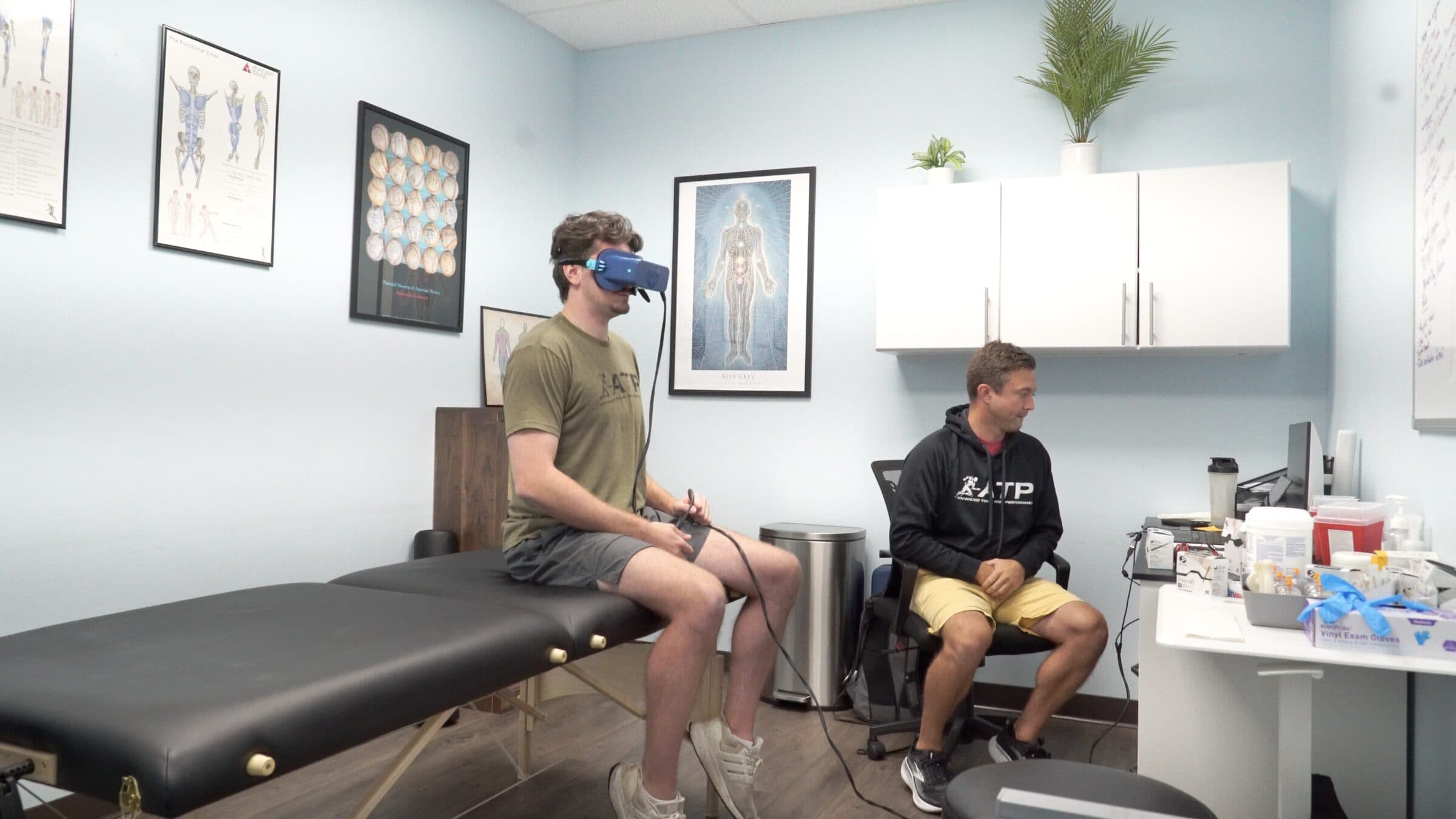
Numb fingers, a cold hand, a dead arm
Tingling fingers, a hand that goes cold, a heavy arm that dies late in outings, with clean imaging, points to the space between the neck and the armpit and the nerves and vessels that run through it. Thoracic outlet syndrome gets its own evaluation at ATP, and it is missed for years elsewhere because it is examined one joint at a time.
When imaging is the right call
Where the arm is tender, how it responds to specific stresses, whether motion is full and whether strength is intact narrow the question before any scan. Growth-plate stress in a young thrower and ligament questions in an adult are medical questions, and ATP coordinates the imaging and the opinion rather than loading an arm that should be examined first. A pinched nerve in the neck and a referred pain pattern can both look exactly like a torn ligament, and a minor-feeling elbow can be a significant one. The examination sorts that first.

What the plan looks like
Treatment for whatever was found, with the clinician who found it: fascial needling, manual work, the neck and the nervous system when they are the driver. The evaluation is long enough to treat something and retest it before you leave, so the working diagnosis is proven rather than assumed. Then a strength and delivery plan for whatever was sending the arm too much force, and a throwing plan that stays inside what the arm tolerates and progresses. Therapy, strength and throwing run under one roof, from one evaluation.

We measure what matters.
Each measurement earns its place by changing a decision about you. Nothing is run for the sake of a number.
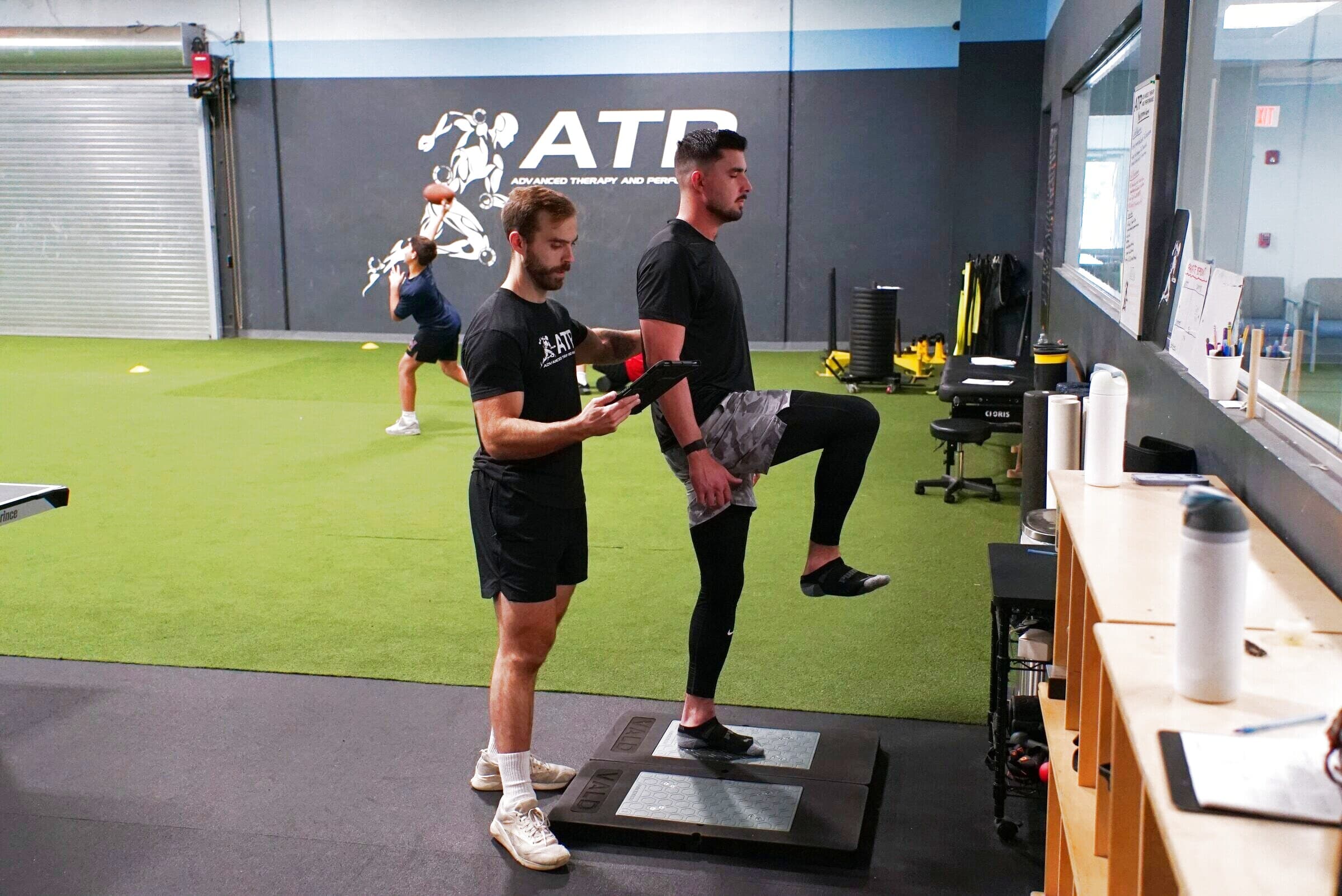
Movement assessmentMovement patterns, restrictions and compensation Decides Whether a painful region is the source or the site that keeps paying for a restriction elsewhere.
VNG / VOGEye movement, gaze stability and vestibular function Decides Whether visual or vestibular function is influencing balance, coordination, symptoms, or movement organization.
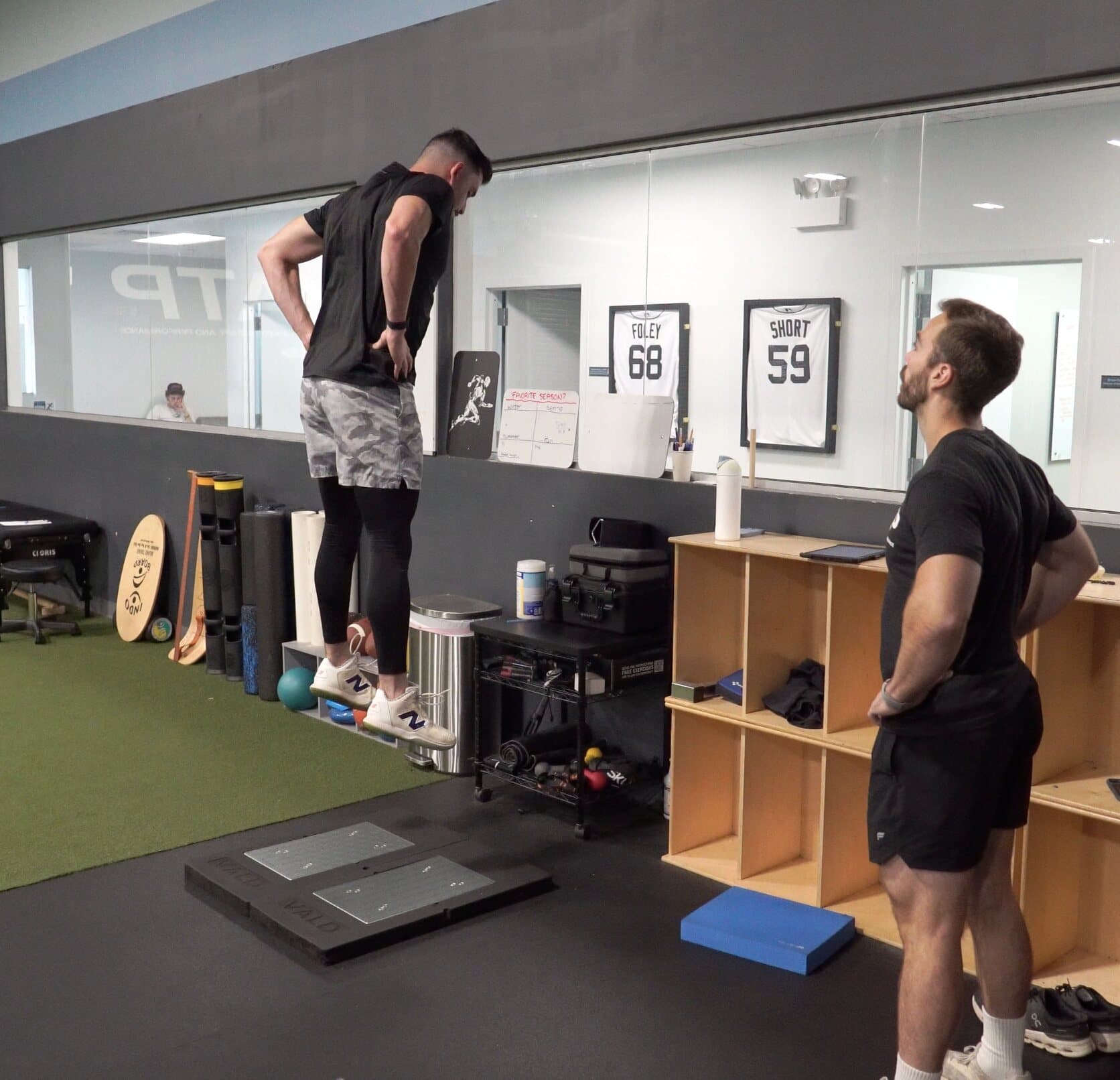
VALD force plates & dynamometryForce, asymmetry, jump and strength metrics Decides Whether strength is there, whether it is symmetrical, and whether it is being expressed as power.
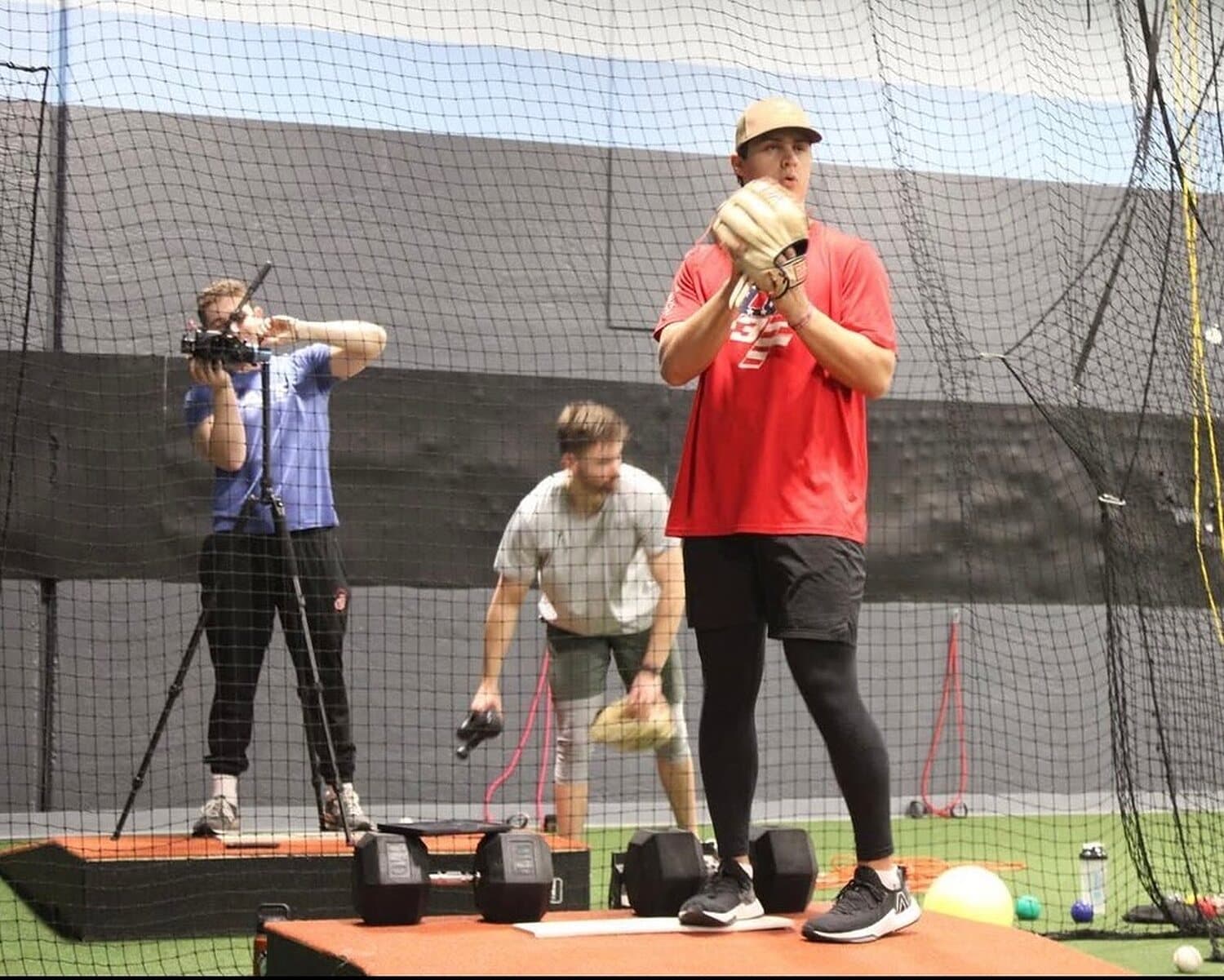
Video analysisThrowing, hitting and movement mechanics frame by frame Decides Where in the sequence force is transferred well, and where it is leaking.
How arm pain is handled here.
Evaluate, decide, act, retest. Adapt feeds back into Evaluate.
Structure is cleared or referred first. Nothing is loaded until that question is answered.
Treat one thing, retest the pain in the room. The working diagnosis is proven before you leave.
Throwing continues where the arm tolerates it, on a plan written by the people who examined the arm.
Eyes, balance and neck rotation are screened, because some arms are a control problem.
Questions people ask.
A year of on-and-off arm pain that returns with every ramp-up is usually a restriction nobody has found rather than an arm that is wearing out. One right-hander with a year of elbow pain, rehab that had not helped, and orders to stop lifting upper body drove ten hours each way, had the posterior shoulder treated, and went back to throwing and training without limitation.
Sometimes, briefly, and the evaluation is where that gets decided for your arm rather than by a rule of thumb. Pain that changes velocity or command, pain in daily life, or numbness in the hand are reasons to be seen before the next outing.
Usually not. The examination decides whether imaging would change the plan, and ATP coordinates it when it would. Bring anything you already have, including the clean ones.
Then the spot was probably treated and the cause was left alone. Bring the notes. The evaluation starts with what was done and what happened, and measures what was never measured.
ATP is out of network. You pay ATP, and as a courtesy we submit the claim to your primary insurance, which reimburses you directly. Verify your out-of-network benefits first; the insurance page explains how.
A clinician or coach responds within one business day, then you pick a time.
Find what's limiting you.
Three minutes of questions, then a preview of where ATP would start. Not a diagnosis.