
Working Diagnosis
I'm dealing with pain that keeps coming back.
Low back pain is not a diagnosis. Put twenty people with it in a room and there are twenty reasons they hurt. ATP rules out the structural problem first, then finds yours: the tissue, how you move under load and fatigue, the nervous system that sets how loud pain is, breathing, the feet, sleep, stress. Treat one thing, retest, until the number moves. Large changes in the first visit are common. Monica Lieving had six years of daily back pain; the driver was neurological, and it is gone.
By Josh Heenan. Reviewed by Kevin Murat, DC, ATC. Updated .
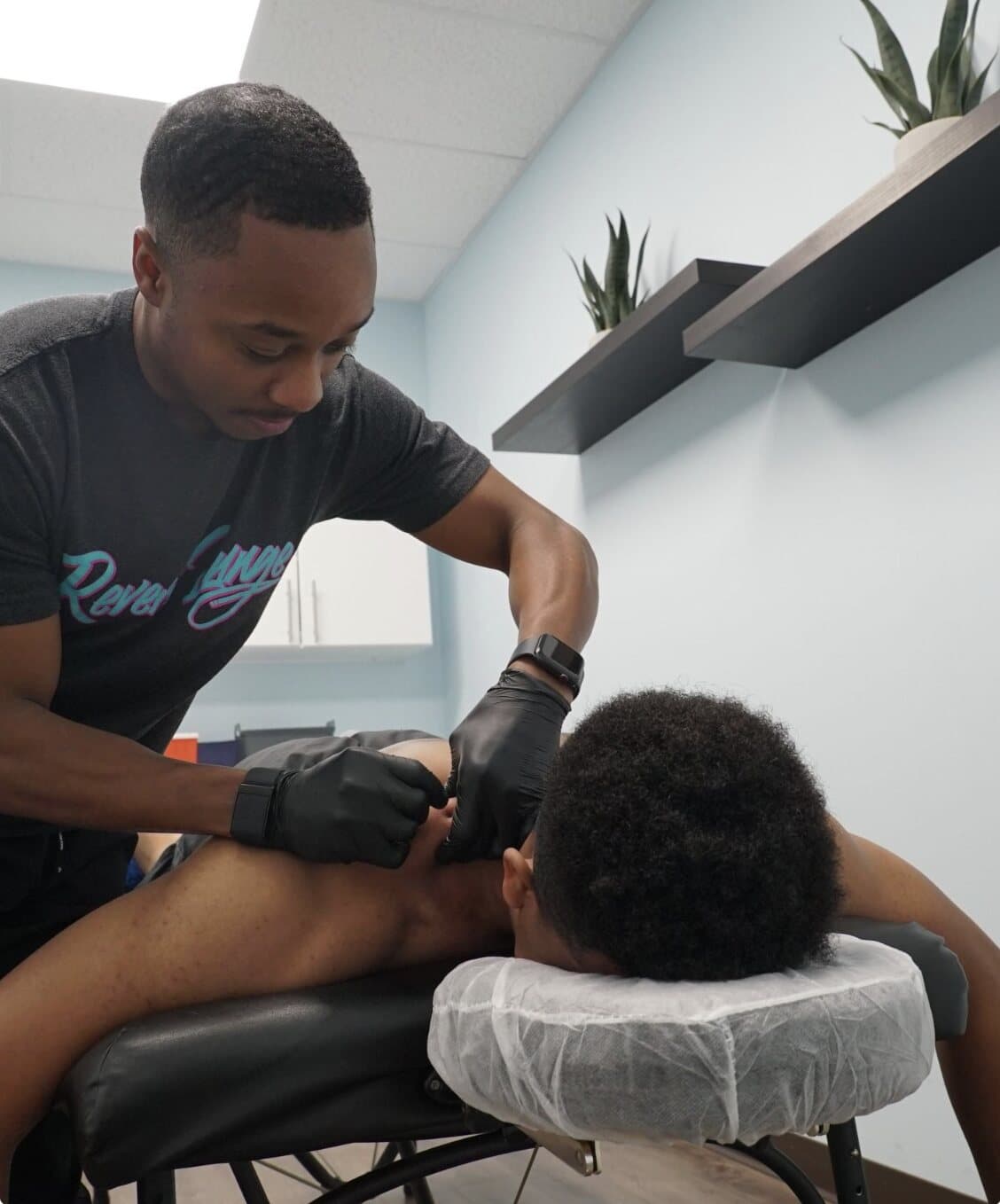
From Josh Heenan's Instagram
Watch: a national champion hitter who cannot hold his gaze a year after a concussion.
Gold Glove, .400 hitter. A concussion a year ago. Now he struggles with tracking pitches, forgetfulness and brain fog, and his eyes cannot find and hold center.
No amount of training fixes that until the brain knows where it is in space. This is the check engine light, and it is what ATP screens for in pain that keeps coming back.
Watch on InstagramTwenty people, twenty reasons
Three back-pain cases on one day at ATP. A right-handed college hitter with right-sided pain when he rotated to swing: a thoracic-spine rotation and motor-control problem, and a few resisted reps took it from a three or four out of ten to zero. An athletic adult with sciatica and a small herniation on her MRI: the eye screen and the nervous system pointed elsewhere, and after treatment she was at zero in every position, leg symptoms included. A powerlifter with a herniation and a surgeon proposing a discectomy: the disc was likely most of it, treatment moved the number a little, and he was sent back to the orthopedist for an injection before anyone talked about an operation.
Same label, three diagnoses, three plans, and one honest referral. A label like low back pain, hip bursitis or tendonitis offers almost nothing toward getting better. A working diagnosis does.
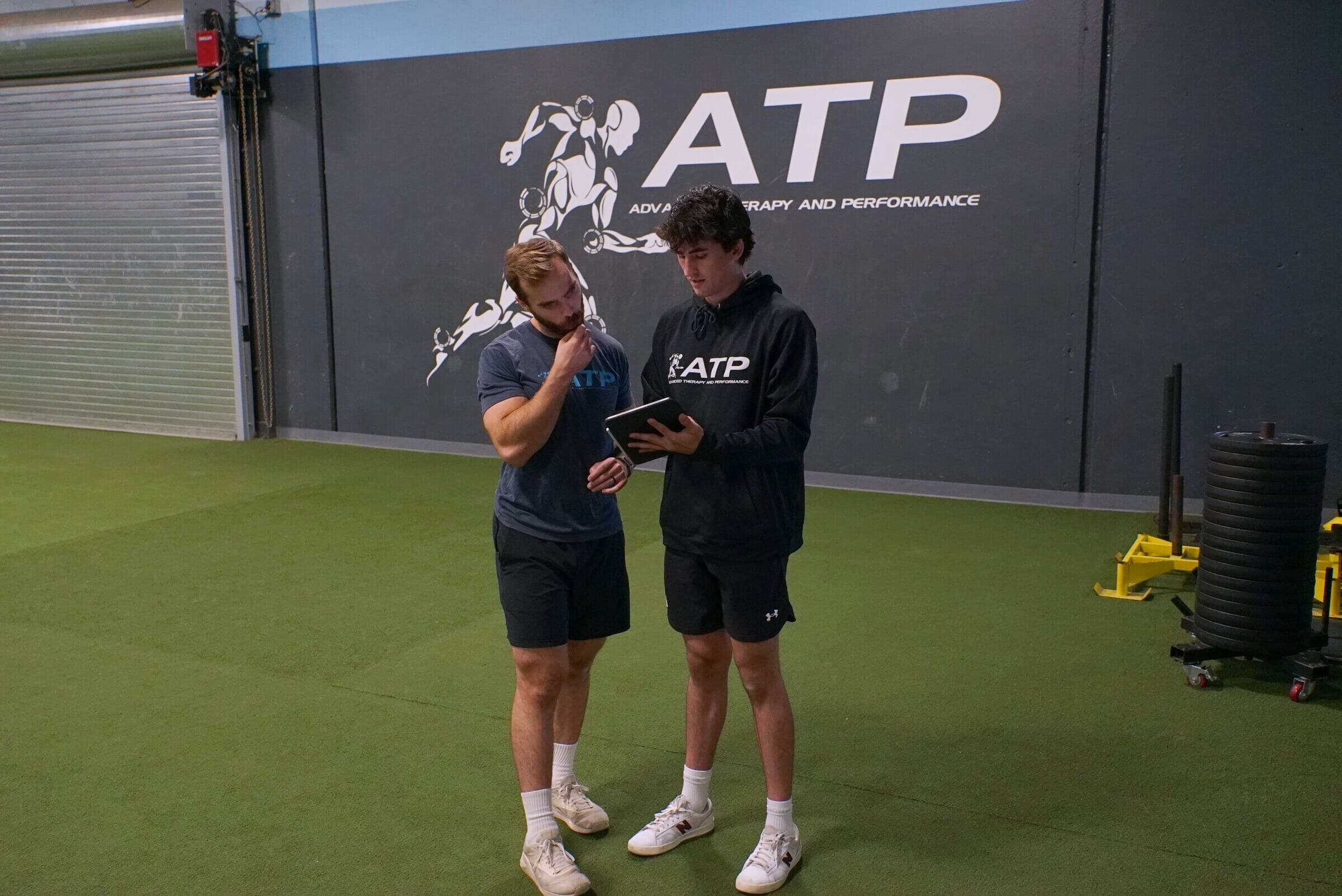
The spot that hurts is where you feel the problem
A man came in with three years of sharp left-sided back pain in extension, at times a seven out of ten, ready to book an MRI and an injection. The site of pain was not the origin. His right quad was neurologically locked down and dragging on the pelvis, and every time he extended, the left side of his low back picked up the slack. The quad was treated, the signaling between spine and leg was reset, and his pain with extension was gone before he left.
Sometimes the low back is the problem. A lot of the time it is just where the person feels it. That is why ATP will treat the neck, the calves, the feet or the hands and watch the back, and why every test is meant to narrow the field. Ruling something out is almost as valuable as finding the driver.
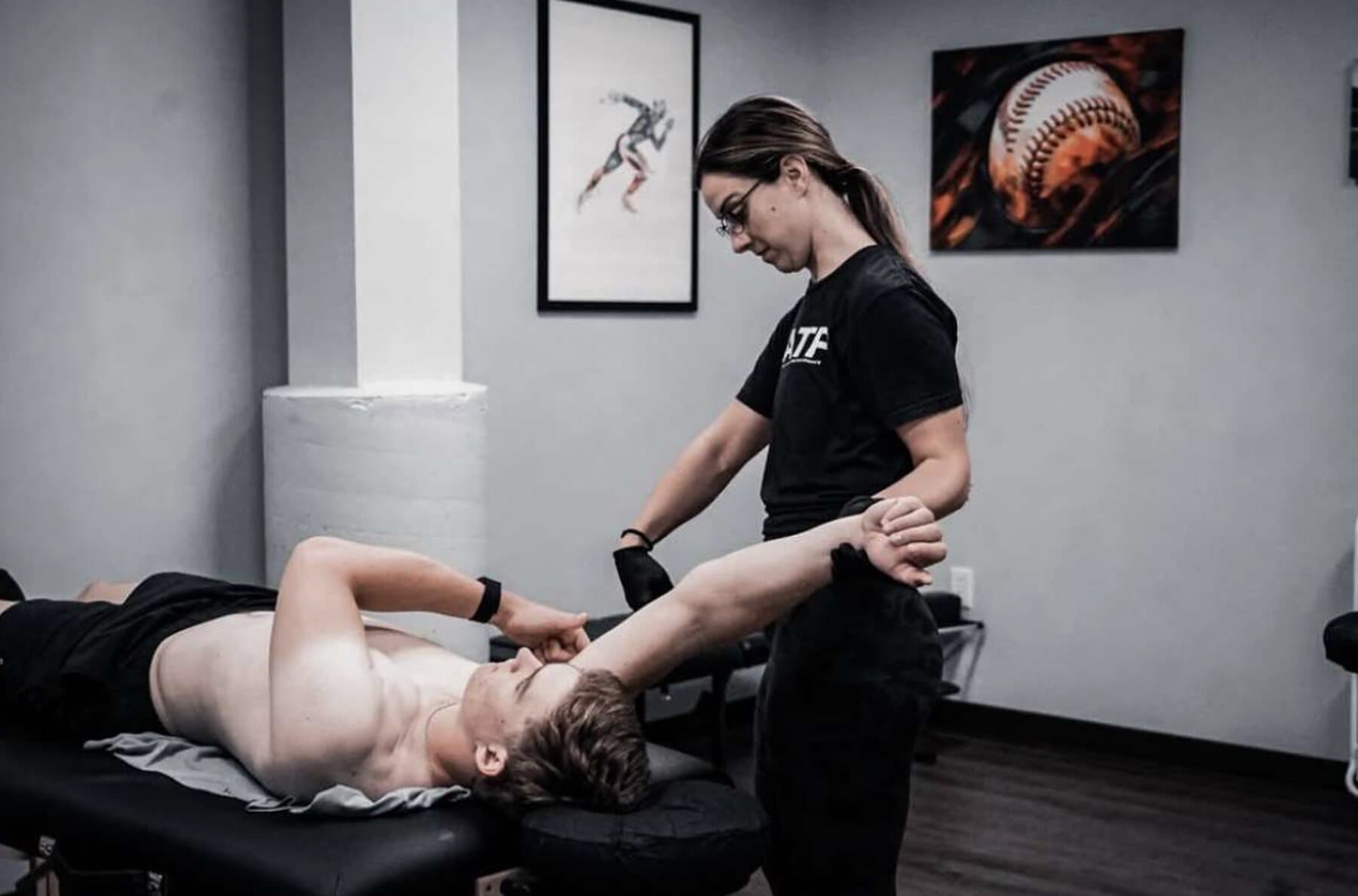
Treat something. Reassess.
Pain was a seven. Now it is a three. What changed? Another intervention. Now it is a zero. The evaluation is built long enough to run that loop inside the visit: rule out structure, change the eyes, breathing, foot input, hip function or trunk control one at a time, and watch what the pain does. Compare that with a quick evaluation, a label, some heat, a few generic exercises and a schedule of three visits a week for eight weeks in the hope it resolves.
That is why large changes in the first visit are common here, and why the next visits are about making it stick, building capacity, and cleaning up the sleep, stress and training load that got you here.
The check engine light
A nervous system under strain does not discriminate. It shows up as pain in the back, the hip or the elbow, and at the same time as sleep that will not hold, digestion that is off, mood that swings, a cycle that is irregular, or a body that cannot touch its toes or turn its head. Athletes and adults arrive with confusing pain that moves from the hamstring to the hip to the shoulder and back, worse at the end of long days, often with a concussion in the history nobody connected to it. On the eye screen those people cannot hold a steady gaze, and on the chemistry screen they are usually short on dopamine.
One young man had a year and a half of brain fog, fatigue, dizziness, body aches and visual distortions in sunlight, and had seen a primary care doctor, an eye specialist, a neurologist and an ear, nose and throat specialist without an answer. His eyes could not stabilize straight ahead and lagged shifting gaze. The nervous system was treated, the morning sunlight, cold exposure and juggling went in, and within hours of the first treatment he felt like a different person. ATP screens all of it because pain that keeps coming back is usually a whole person, and the whole person is what gets treated.
After the evaluation
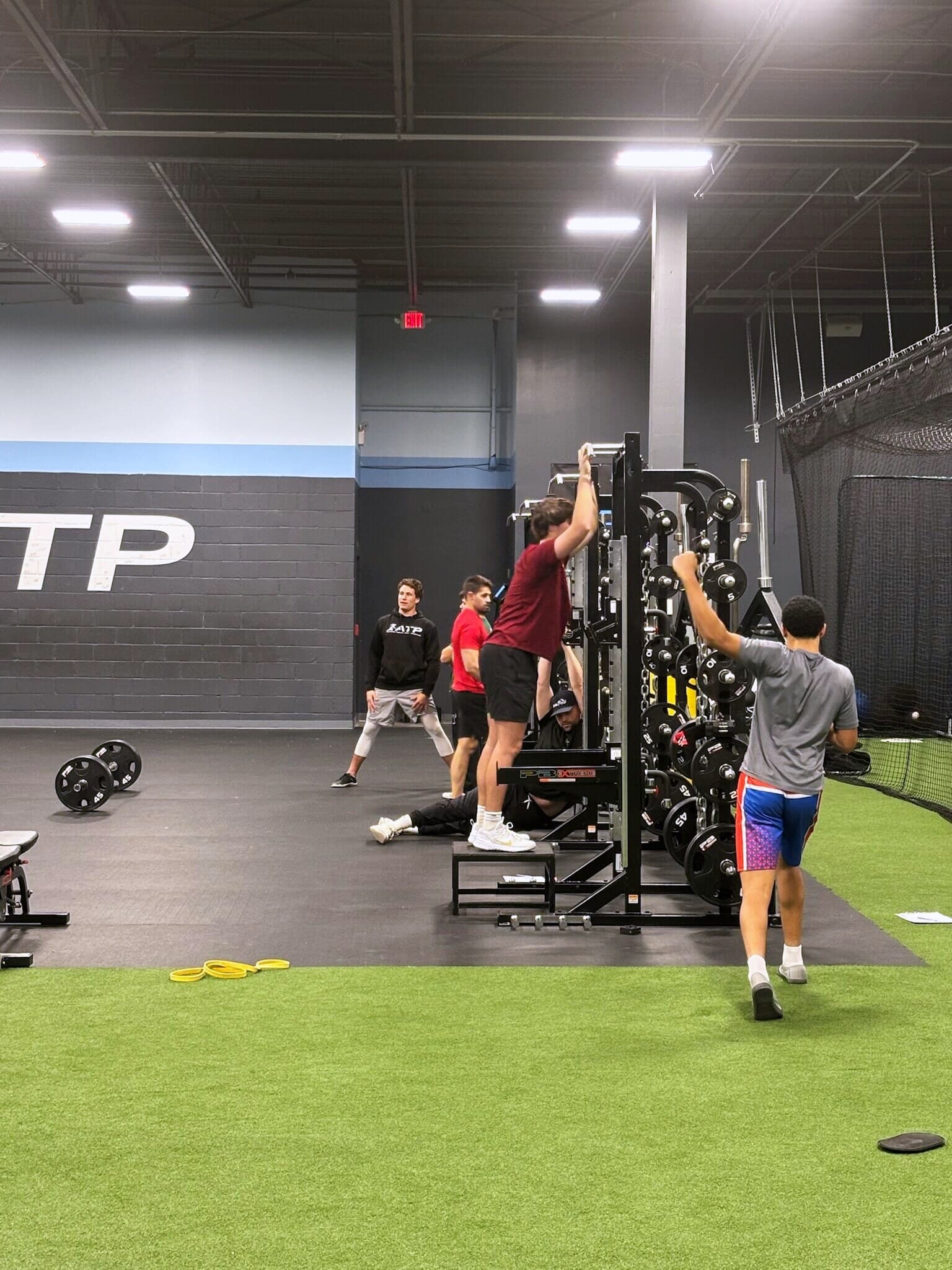
Hands-on treatment for what is driving the pain: manual therapy, dry needling, acupuncture, mobilization and corrective exercise, with a licensed chiropractor and athletic trainer or a certified athletic trainer, retested as it goes. Then the plan moves into training on the same floor, because pain caused by a body with too little to work with does not stay away on treatment alone.

Insurance
ATP is out of network. You pay ATP, and as a courtesy we submit the claim to your primary insurance, which reimburses you directly. Verify your out-of-network benefits before the first visit; the insurance page walks through it.
We measure what matters.
Each measurement earns its place by changing a decision about you. Nothing is run for the sake of a number.
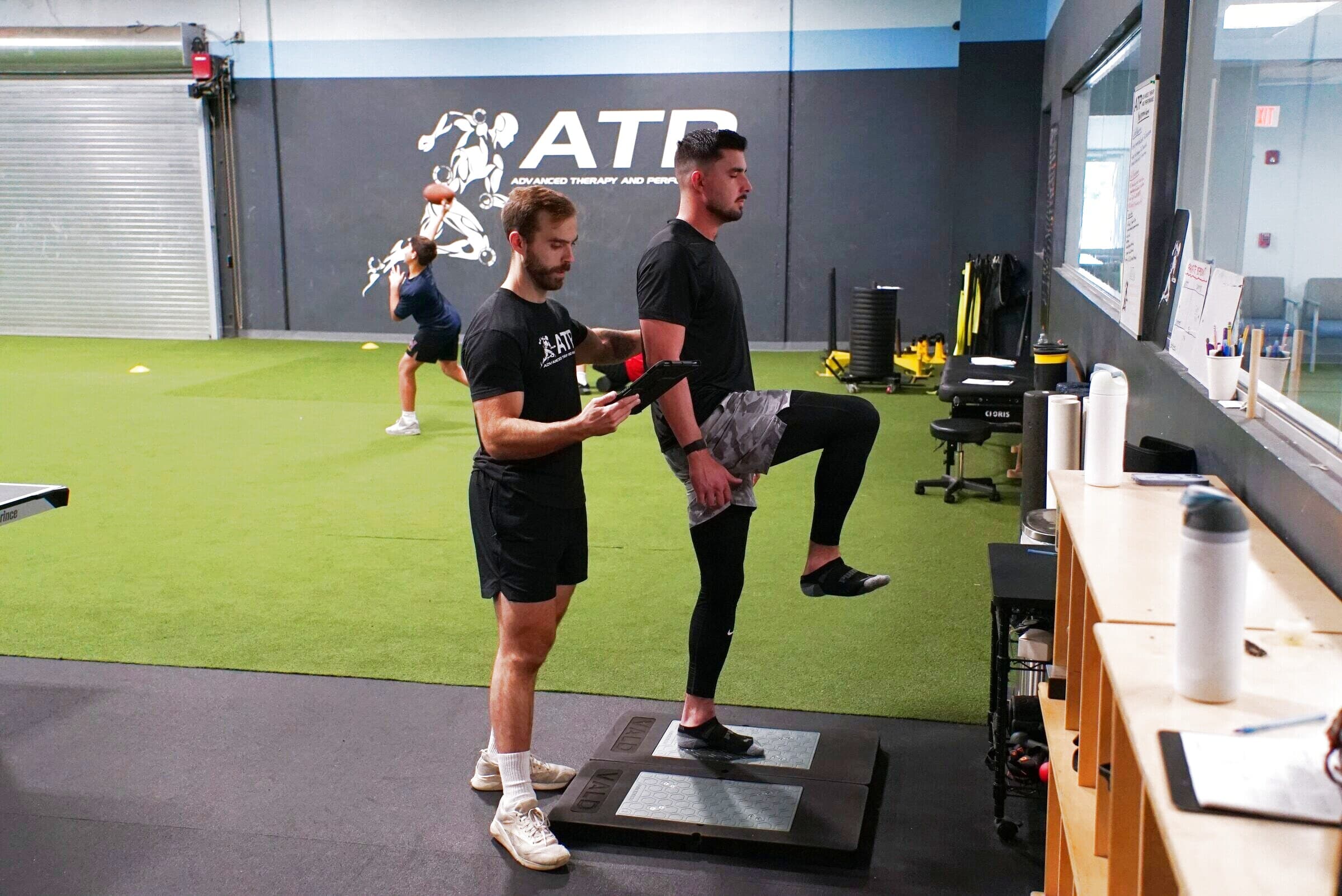
Movement assessmentMovement patterns, restrictions and compensation Decides Whether a painful region is the source or the site that keeps paying for a restriction elsewhere.
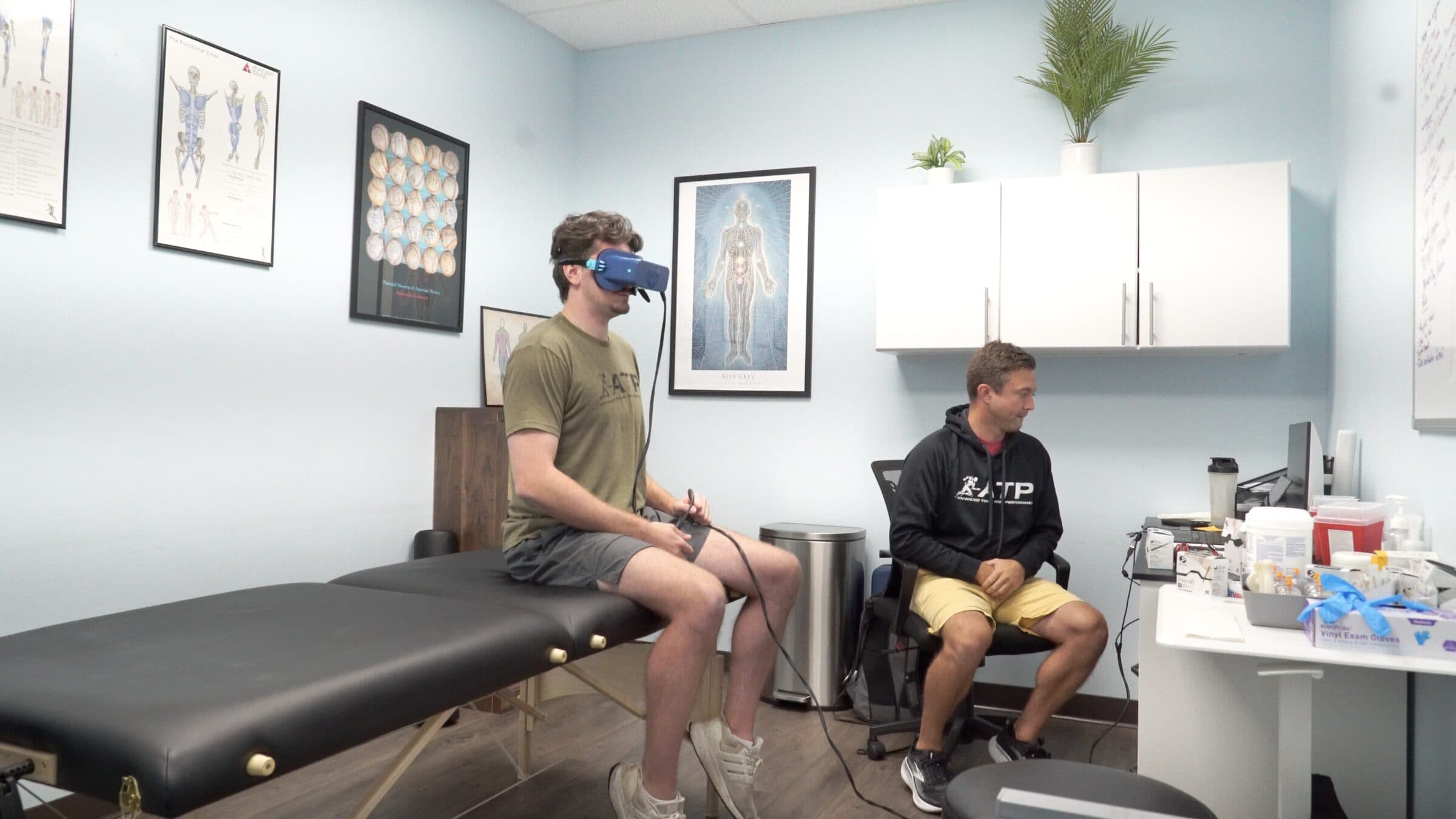
VNG / VOGEye movement, gaze stability and vestibular function Decides Whether visual or vestibular function is influencing balance, coordination, symptoms, or movement organization.
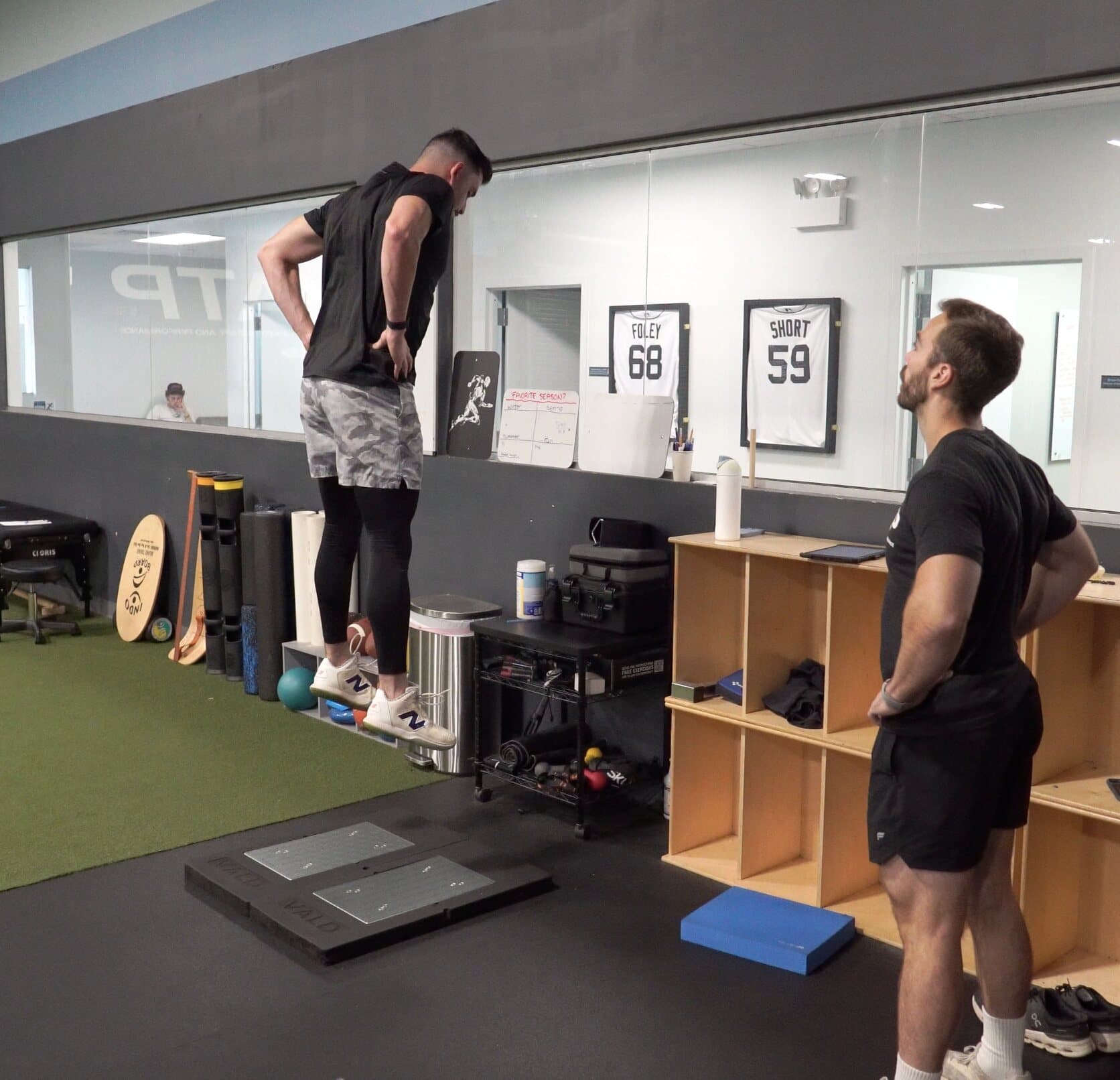
VALD force plates & dynamometryForce, asymmetry, jump and strength metrics Decides Whether strength is there, whether it is symmetrical, and whether it is being expressed as power.
How therapy works here.
Evaluate, decide, act, retest. Adapt feeds back into Evaluate.
Evaluation includes visual and vestibular screening when your history points there.
Manual therapy, dry needling and graded loading are tools. The working diagnosis chooses which, and when.
Acupuncture, for pain, sleep and recovery, and functional neurology, for symptoms that live in the nervous system, are part of the plan where the evaluation points there.
Therapy hands off into training in the same building, with the same notes and the same people.

Questions people ask.
Many of the adults on this floor are not. The evaluation is the same because the systems are the same; the plan is built around your work, your sleep and the thing you want back.
Bring all of it. Findings on imaging are common and often unrelated to the pain, and sometimes they are the whole problem, which is why structure is ruled out first. Physical therapy that treated the spot may have left the cause alone. The evaluation starts from what was done and what happened.
Then you will hear it fast. If the evaluation shows red flags, or someone else is better suited to your case, ATP cancels the follow-ups and gets you to the right person. Dragging out weeks of treatment on a case that is not improving is not the standard here.
Only when the history and examination point to structure that would change the plan. ATP coordinates it when that is the case.
A clinician or coach responds within one business day, then you pick a time.
ATP is out of network. You pay ATP, and as a courtesy we submit the claim to your primary insurance, which reimburses you directly. Verify your out-of-network benefits first; the insurance page explains how.
Find what's limiting you.
Three minutes of questions, then a preview of where ATP would start. Not a diagnosis.