
Goal
I want to throw harder.
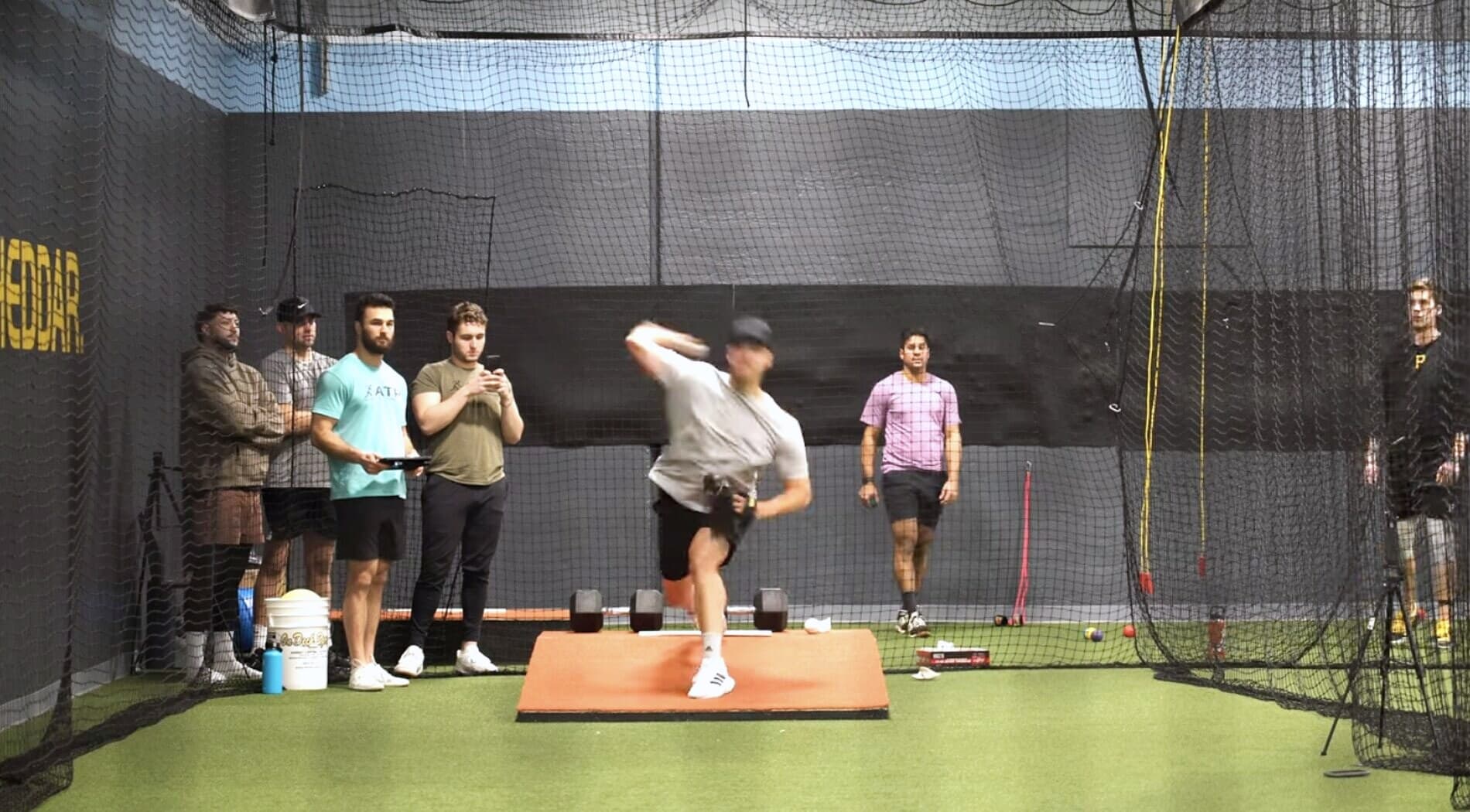
Velocity comes from the whole person: bodyweight, strength that turns into power, a delivery that keeps the force it makes, sleep, and an arm that tolerates full intent. ATP measures all of it in one evaluation, at full intent, and names the lead domino, the one thing that moves everything else. Bryce Hill went from 74 to 101.7 mph and 140 to 220 lb on that kind of plan. Pitchers and position players, youth to pro. Stamford, CT or fully remote.
By Josh Heenan. Reviewed by Luke Dawson. Updated .
The lead domino
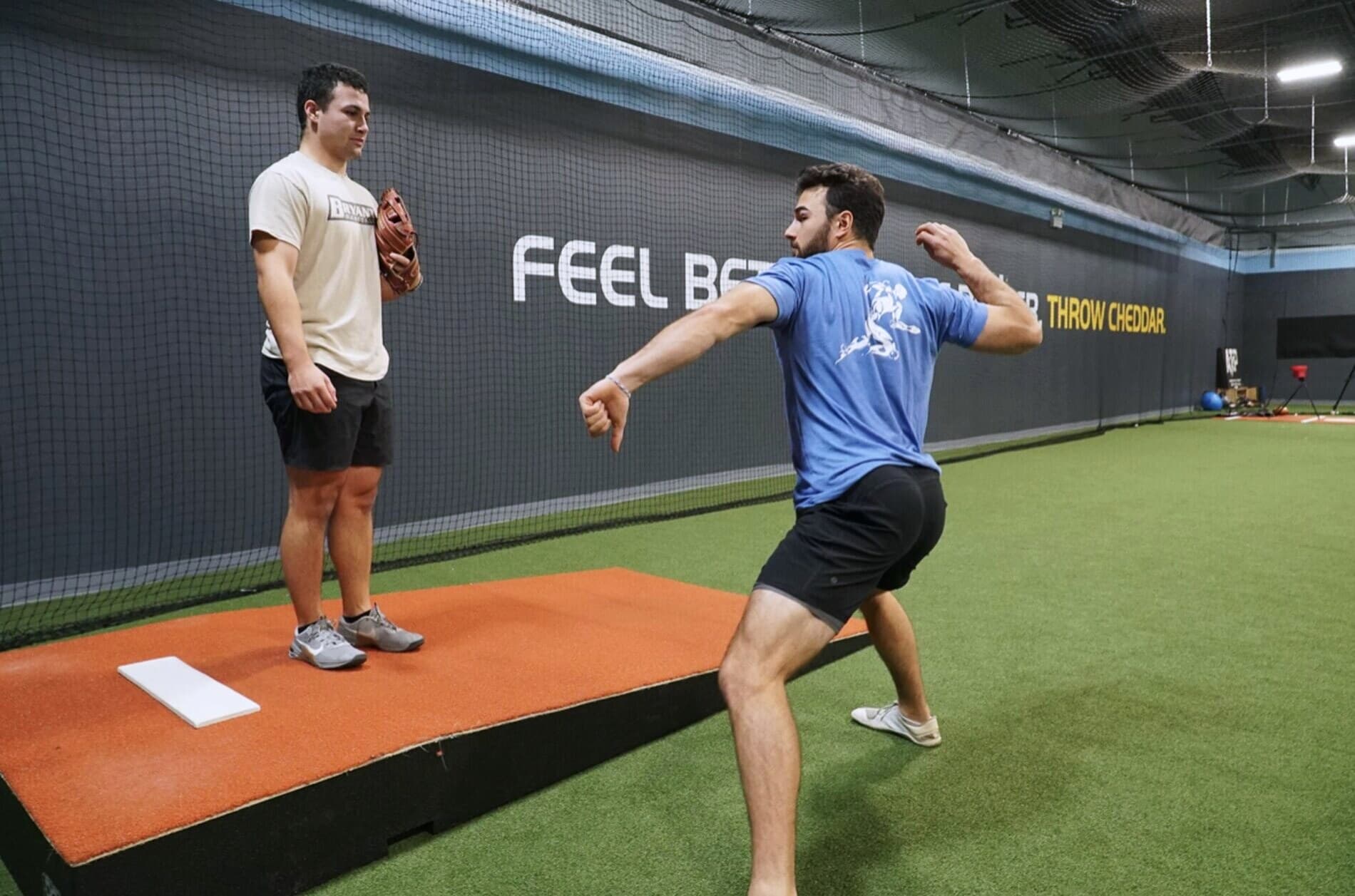
Every velocity case at ATP starts with a working diagnosis: the one underlying issue that, once fixed, moves everything else. The evaluation covers a movement screen, strength and power on force plates, the delivery on video at full intent, and a neurological screen. Then the plan hammers that one thing first.
The working diagnoses behind ATP's velocity cases read like this: a trail leg that yanks the hips out of the delivery, a front side that gives way, timing that leaks force before release, a force-velocity curve that is strong and slow. Each one gets a different plan. The same program for everyone is how athletes get stronger and throw the same.
The body has to arrive first
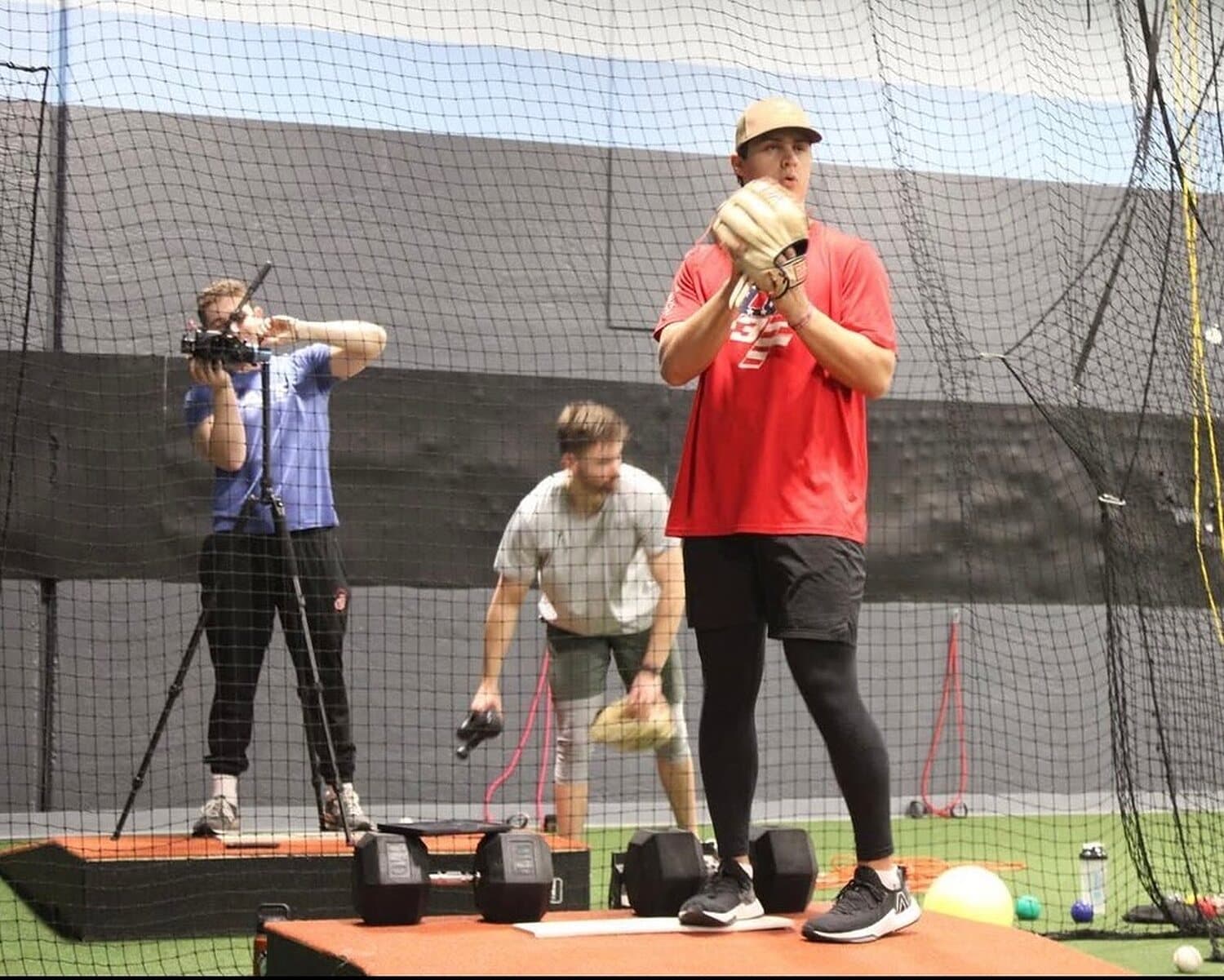
Ball speed tracks the mass and force behind it. Josh Heenan's published system for a 90 mph arm has always come down to size, strength, power, mobility and mechanical efficiency, with targets an athlete can put on a board and chase: bodyweight against height, a reverse lunge, chin-ups, long toss. Sammy Stafura went from 140 to 185 lb and a 70 mph pull-down to 91 in fifteen months on those targets, and on to the draft.
A pitcher at 140 lb who is never hungry is rarely a diet problem alone. Low appetite tracks with low dopamine, poor sleep and stimulants, and the evaluation screens for all three. Sleep is written into the plan, and the phone leaves the bedroom.
The brain steers the throw
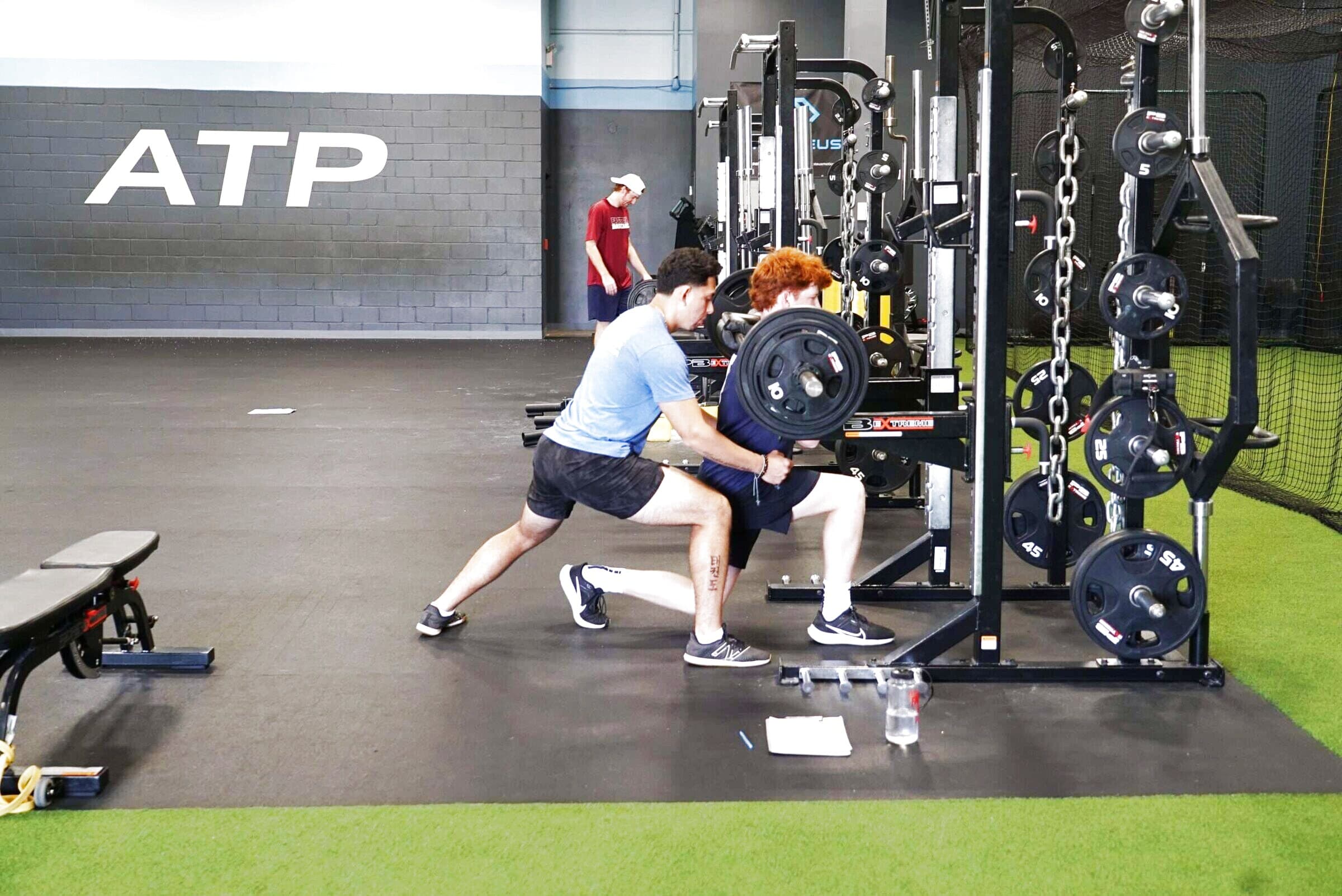
A pitcher whose eyes drift when he tries to hold center, or whose head turns the moment the goggles go on, is fighting his own nervous system on every pitch: misses high and inside when the arm launches early, low and away when it drags. ATP screens eye tracking, balance and neck rotation in the velocity evaluation because they decide how a delivery repeats at speed.
A Division I right-hander had felt off for weeks, no zip and no command. His eyes overshot center in every direction and took a second to find the middle. Two days after the nervous system was treated he reported his best throwing session in weeks. The cause was sleep.
Measured, in public
Andrew Wong went from 84 to 95 mph in 22 months. Chris Yannella from 79 to 91 in about a year. Andrew Castelluccio from 73 to 87 in two years. Tyler Easterbrook from 76 to 89.9 in two and a half years. Every number on this site says where it came from: Perfect Game, PBR, or ATP's own radar.
Your questions go to the people who evaluated you
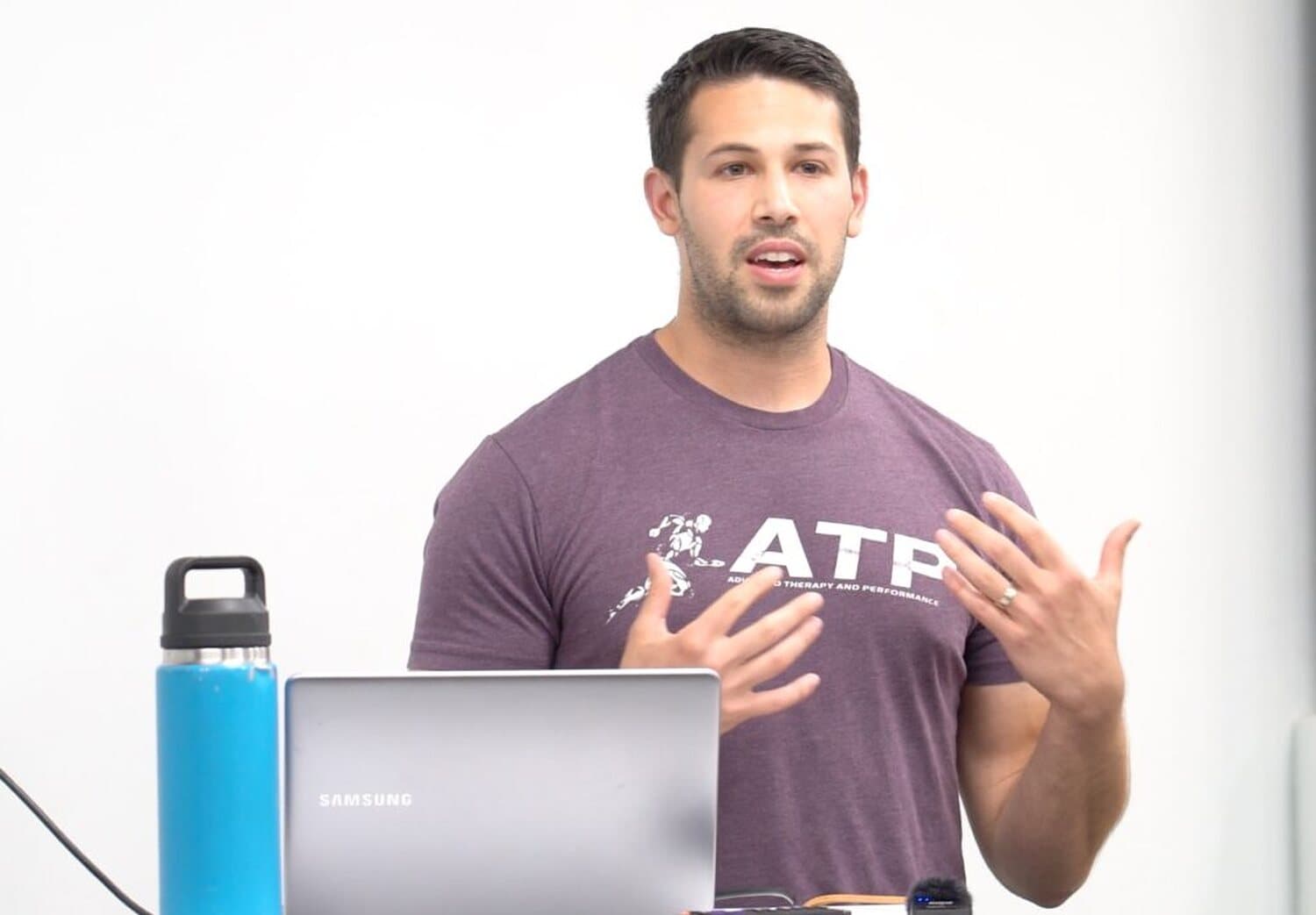
On site or remote, the coach who answers you is the one with your evaluation in front of them. Remote athletes get the same evaluation logic, a weekly plan, and video feedback on the throw from a coach who pitched in Triple-A. The hybrid version, one evaluation in Stamford and the rest at home, is common.
We measure what matters.
Each measurement earns its place by changing a decision about you. Nothing is run for the sake of a number.
Video analysisThrowing, hitting and movement mechanics frame by frame Decides Where in the sequence force is transferred well, and where it is leaking.
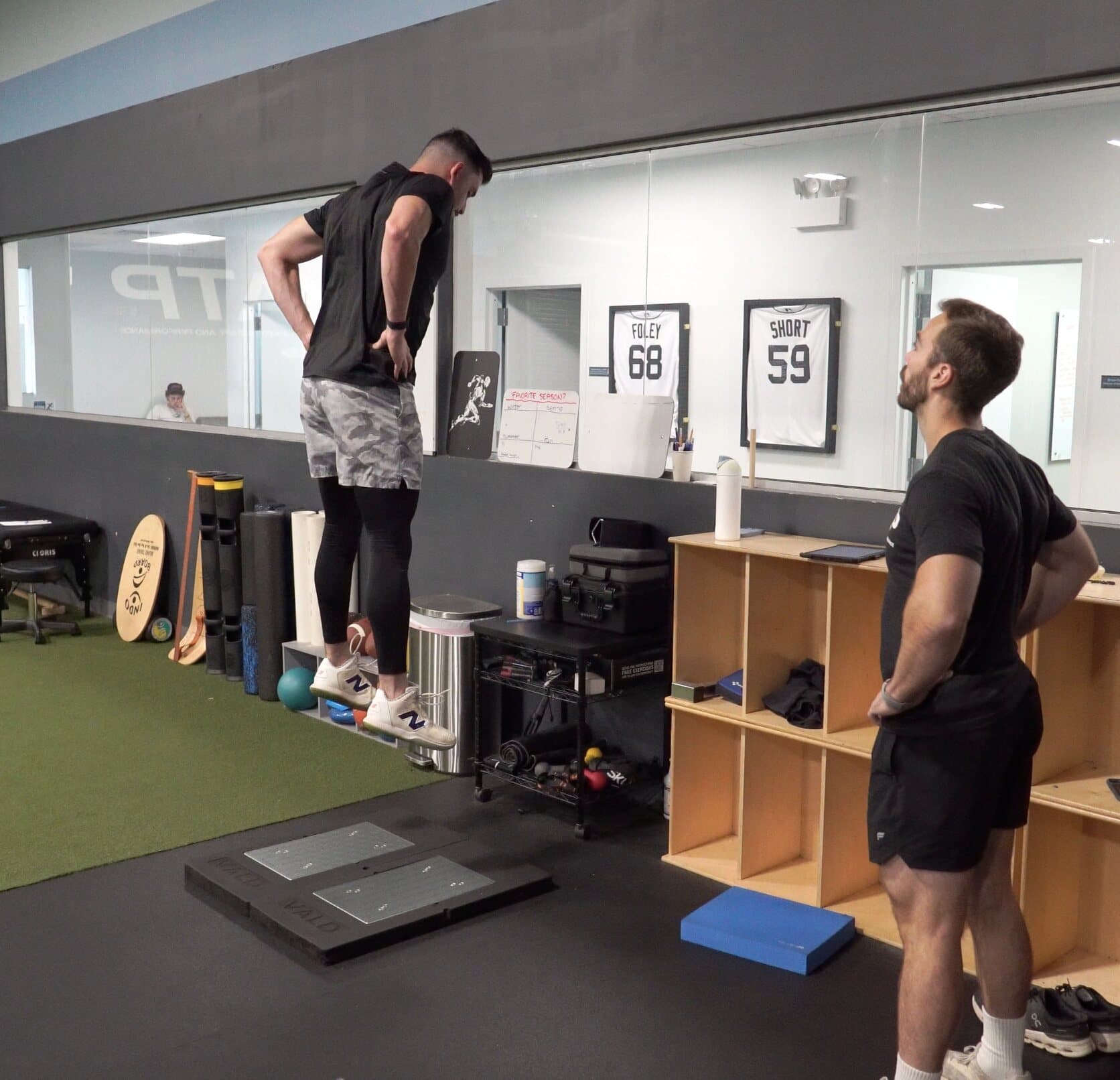
VALD force plates & dynamometryForce, asymmetry, jump and strength metrics Decides Whether strength is there, whether it is symmetrical, and whether it is being expressed as power.
TrackManVelocity, spin, movement and release metrics Decides Whether a mechanical or physical change is showing up where it counts: in the ball.
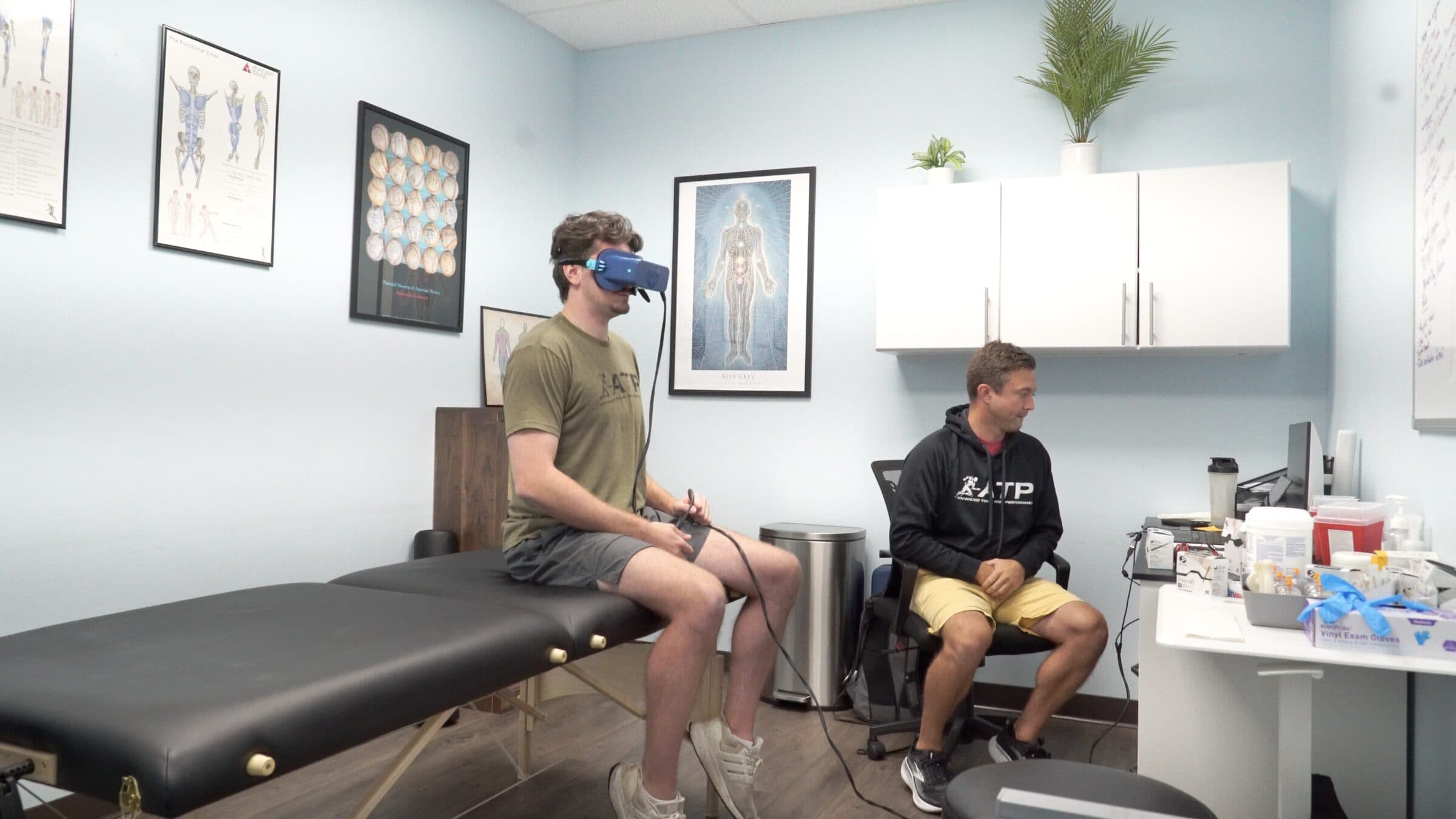
VNG / VOGEye movement, gaze stability and vestibular function Decides Whether visual or vestibular function is influencing balance, coordination, symptoms, or movement organization.
How it works for a thrower.
Evaluate, decide, act, retest. Adapt feeds back into Evaluate.
Full-intent video and force testing. A bullpen at 70 percent hides the problem.
The working diagnosis picks what gets hammered first: the lunge, the trunk, the timing or the arm, and nothing else until it moves.
Retest every block. If the ball is not moving, the plan changes.
Your questions go to the people who evaluated you and wrote the plan, on site or remote.
Questions people ask.
That is the most common velocity story on the floor: strength that has not become power, force that leaks in the delivery, or a frame that has not arrived. The answer is usually on the full-intent video or the force plates, and it is different for each athlete. The evaluation says which one it is for yours.
Nobody honest can promise a number before measuring you. The cases above are real timelines for real athletes, and the gains came from fixing what each one was actually stuck on. The evaluation tells you where your ceiling is being set and what moves it.
Velocity chased without measuring the arm is how arms get hurt. Arm strength, range of motion, neck rotation and workload are part of every ATP velocity evaluation, and the plan keeps throwing where the arm can tolerate it. The same targets that build velocity are the ones ATP's data ties to fewer arm injuries.
Yes. Infield and outfield arms, catchers, and softball pitchers and position players. Exit velocity is measured the same way: Casey Meyer went from 85 to 96 mph in 17 months, Sammy Stafura from 75 to 100.
ATP runs fully remote pitching development with the same evaluation logic, a weekly plan and video feedback. Hybrid works too: evaluate in Stamford, train at home, check in on camera.
Find what's limiting you.
Three minutes of questions, then a preview of where ATP would start. Not a diagnosis.