The question
Why does my elbow hurt when I throw?
- By
- ATP clinical team
- Last updated
- Reading time
- 4 min read
Systems this could involve
Medical · Tissue · Capacity · Skill · Recovery · Neuro. The evaluation decides which of them matter for you.
Overview
Elbow pain when throwing is one of the most common reasons a pitcher walks into ATP. It is also one of the least specific. The inside of the elbow is where a throw's forces finally arrive, so it is often the place that complains first about a problem that started somewhere else.
That does not mean the elbow is never the problem. Sometimes it is, and sometimes it needs medical attention before anything else. This page walks through how ATP thinks about it, so that the question you bring to an evaluation is sharper than 'my elbow hurts.'
What could be contributing
These are places ATP would look. None of them is a diagnosis, and more than one is usually involved. Tap a system to see why it matters for this question.
Tissue & Movement. Tissue tolerance at the elbow
Tissue & Movement
Tissue tolerance at the elbow
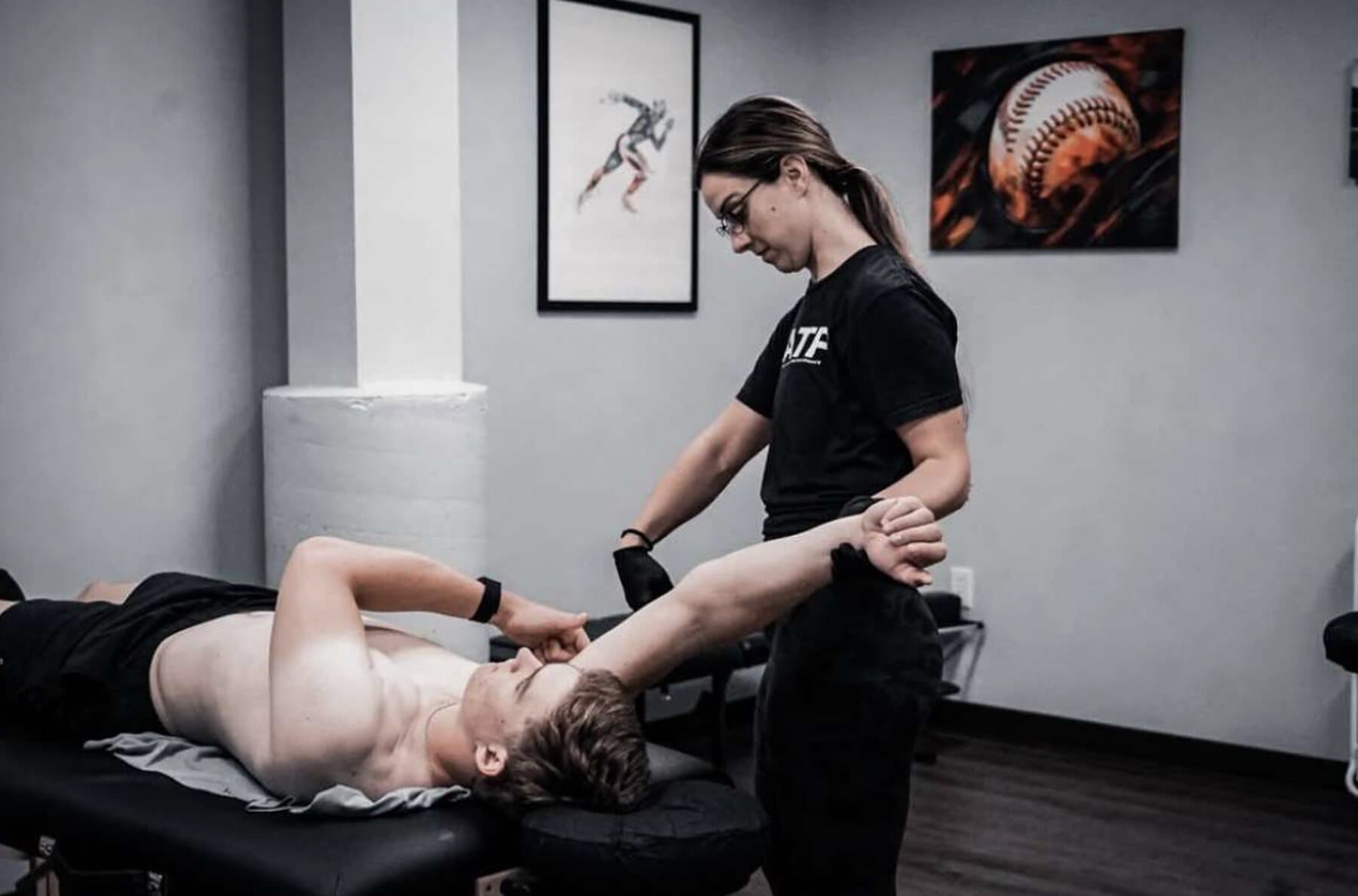
The ligament, flexor-pronator muscles, and surrounding tissue have a load ceiling. If throwing demand rises faster than tolerance, the elbow signals it. This is real and needs to be evaluated directly.
- Tissue
Tissue tolerance at the elbow
The ligament, flexor-pronator muscles, and surrounding tissue have a load ceiling. If throwing demand rises faster than tolerance, the elbow signals it. This is real and needs to be evaluated directly.
- Capacity
Upstream capacity
The elbow does not generate most of a throw's force. The legs, hips, and trunk do. When they cannot produce or accept force, the arm makes up the difference. Strength, power, and bodyweight are part of an elbow evaluation.
- Skill
Delivery and timing
A delivery where the arm is late, the trunk opens early, or force leaks before release increases elbow stress on every pitch. It shows up on full-intent video and almost never in a bullpen at 70 percent.
- Recovery
Workload and recovery
Volume, intensity, sleep, and nutrition decide how much throwing the elbow can absorb. Many elbow problems are a recovery problem wearing a tissue problem's clothes.
- Neuro
Sensorimotor organization
Balance, visual tracking, and motor control influence how the body organizes at speed. When a concussion history, dizziness, or visual symptoms are present, ATP screens those systems, because they can change a delivery without anyone noticing.
- Medical
Structure and growth
In growing athletes, the growth plate is the weakest link and behaves differently from adult tissue. In adults, ligament integrity matters. Both can need imaging or a medical opinion, which ATP coordinates.
Questions ATP would ask
The history is where the evaluation starts. Each question moves where ATP looks first.
Does it hurt during daily life, or only when you throw at intent?
Has treatment to the elbow itself helped, and for how long?
Have you gotten stronger this year? Has velocity followed?
Does velocity or command fall apart as the outing goes on?
Any dizziness, headaches, visual fatigue, or concussion history?
What did the last three months of throwing look like?
How your answers change the evaluation
The same symptom points in different directions. Here is how an answer changes where ATP would go first.
If you said
“Pain only at full intent, fine in daily life”
Then ATP would
Prioritize tissue tolerance under load, full-intent video, and force testing. Look for where the delivery asks the arm to do the body's job.
TissueCapacitySkillIf you said
“Constant ache, worse at night, growing athlete”
Then ATP would
Rule out structural and growth-plate involvement first, in coordination with a physician, before loading anything.
MedicalIf you said
“Stronger this year, velocity flat, elbow sore”
Then ATP would
Evaluate power expression and force transfer. Strength that cannot get into the throw tends to end up in the arm.
CapacitySkillIf you said
“Treatment helps for a few days, then it returns”
Then ATP would
Treat the tissue, and evaluate what keeps recreating the problem: mechanics, capacity, workload, or sensorimotor control.
TissueNeuroCapacitySkillIf you said
“Headaches or dizziness alongside the elbow”
Then ATP would
Add visual and vestibular screening. Those systems can change the delivery without the athlete noticing.
NeuroSkill
What ATP might evaluate
Only what answers a real question for you. The history decides which of these the evaluation includes.
- Elbow and shoulder range of motion, strength, and tissue response to load
- Medical history and imaging, with referral or coordination where indicated
- VALD force plate and strength testing for capacity and asymmetry
- Proteus rotational power
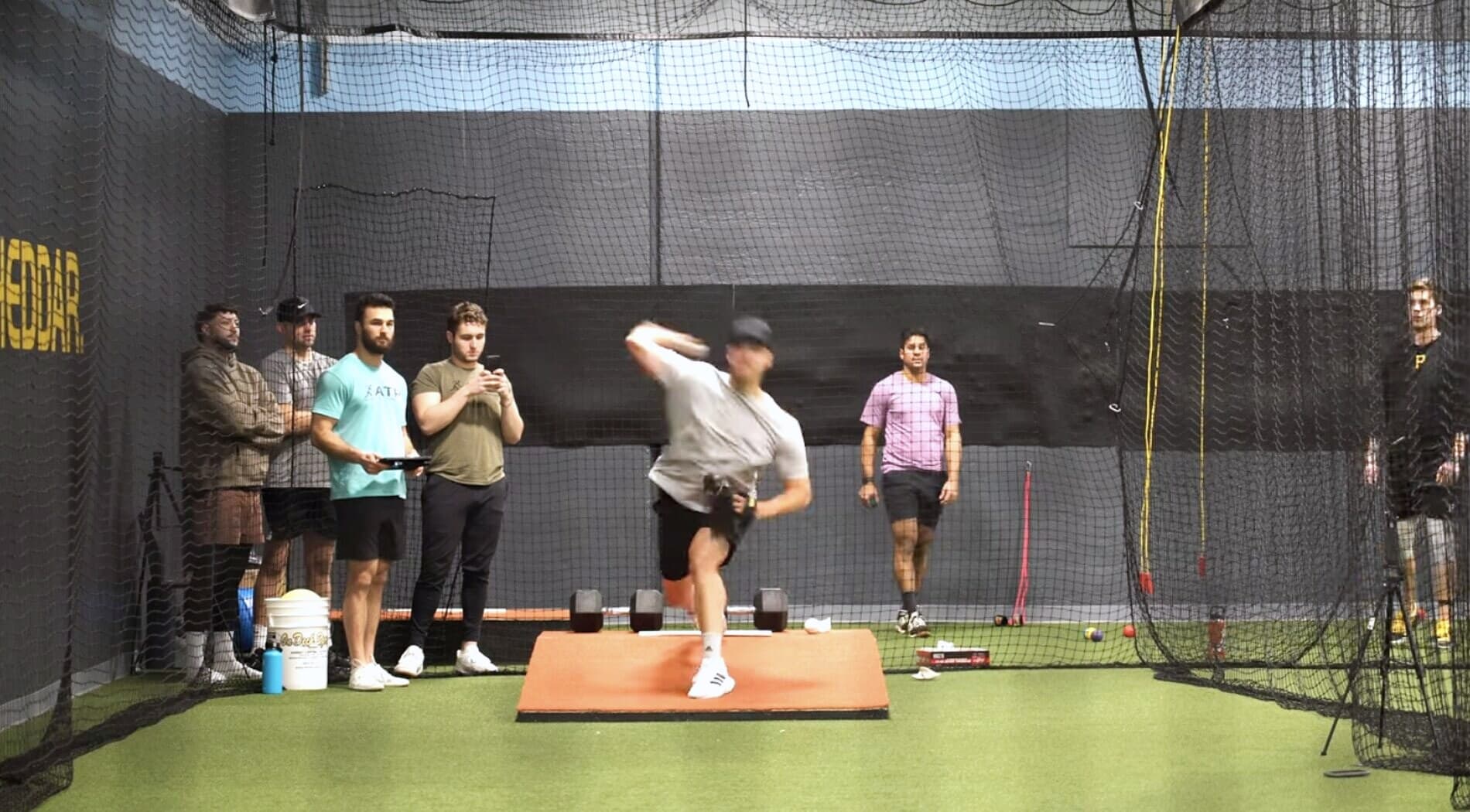
- Video of full-intent throwing
- TrackMan where the question is whether a change reaches the ball
- Throwing workload over the last three months
- Sleep, nutrition, and bodyweight trend
- Visual, vestibular, and balance screening when history points there
The case
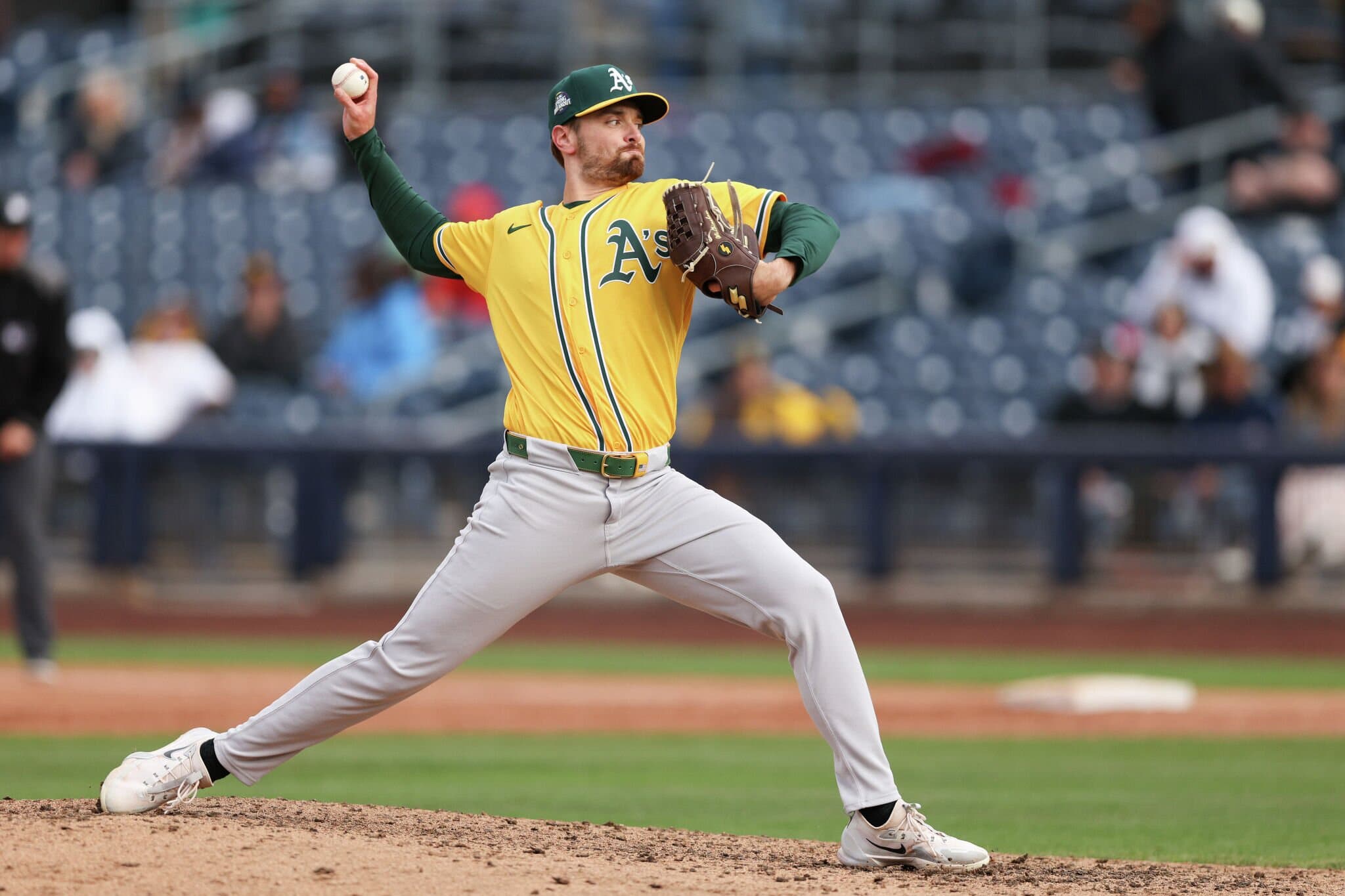
One person who walked in with a version of this question, and what mattered for him.
What this does not tell you
- It does not tell you what is wrong with your elbow. Only an evaluation can do that.
- It does not replace a medical opinion when one is needed, especially in a growing athlete.
- It does not mean every elbow problem has a single cause. Most have several, and the order matters.
Questions people ask
If the pain is sharp, sudden, or present at rest, stop and seek medical evaluation. If it is mild and only at high intent, reduce intensity and get evaluated soon rather than throwing through it. An evaluation will tell you what is safe.
Not always. Imaging is useful when the history and examination point toward structural injury. ATP will tell you if that is the case and coordinate with your physician.
Usually yes. Most of the body can and should keep training. The evaluation decides what to modify, not whether to stop.