
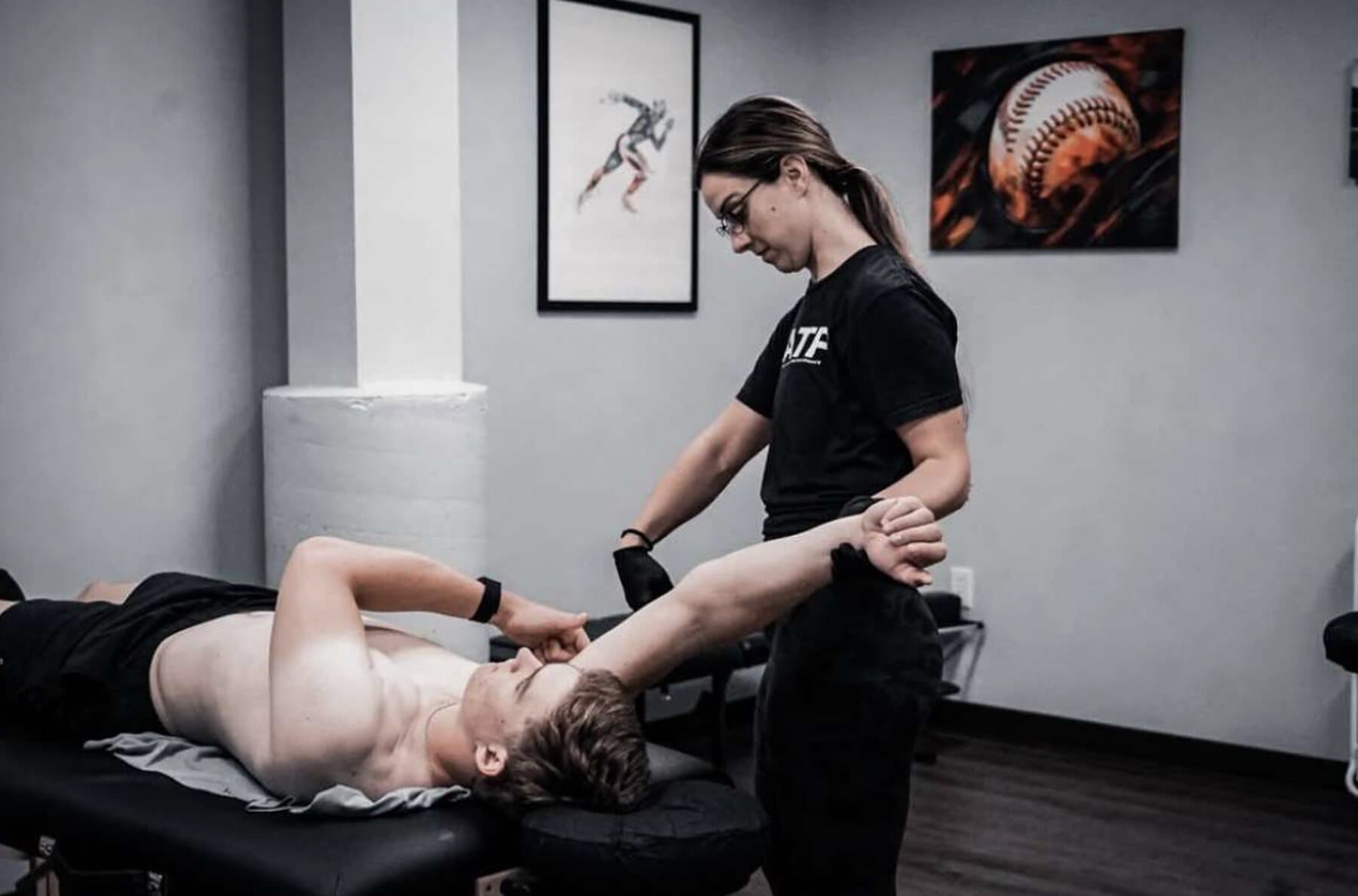
Illustrative composite
Active adult, golfer
Lift, golf, work, and play with the kids without the back deciding the week.
A composite built from patterns ATP sees, not one person. It shows how the evaluation thinks. Names and numbers appear only once ATP has verified a case and holds permission.
Where it started.
Flare-ups every six to eight weeks. Physical therapy, chiropractic, and massage had each helped for a few days. Imaging was unremarkable. Headaches and motion sensitivity had never been connected to the back.
What they wanted
To stop managing around it. To train hard again and not think about his back on the first tee.
What ATP saw.
ATP evaluated 5 of the seven domains for this case. The lit circles are where the history sent us. Tap any circle to see what ATP looks at there.
Working diagnosis
The lumbar tissue was irritable but was not the driver. Visual and vestibular testing showed a gaze-stability problem that was changing how the trunk organized under rotation and fatigue. Sleep and stress were amplifying sensitivity. Strength had dropped after years of protecting the back.
Medical · Tissue · Neuro · Capacity · RecoveryTap a circle to see what ATP looks at there.
In order.
What came first, and what came after.
Priority 1: Visual and vestibular function, because it was changing the movement strategy everything else relied on
Priority 2: Reintroducing load the back could actually tolerate, then progressing it
Priority 3: Sleep and stress patterns written into the plan
What we did.
The tools follow the diagnosis. Every item here was chosen after the priorities were set.
Interventions
- Vestibular and gaze-stability exercises
- Manual therapy and dry needling for the irritable tissue
- Graded strength program starting with hinge patterns
- Sleep and recovery plan
Testing
- VNG/VOG
- Movement assessment
- VALD strength and asymmetry testing
Format
- Weekly therapy, then biweekly
- Two supervised training sessions a week
How the plan changed.
Manual therapy had been reduced early because reassessment showed the back was tolerating load well. The vestibular work was extended when a plateau appeared under fatigue. The retests set the pace, and the plan followed them.
- Evaluate
- Working Diagnosis
- Prioritize
- Intervene
- Reassess
- Adapt
Now
Find what’s limiting you.
Every case here started the same way: an evaluation, a working diagnosis, a decision about what comes first.